European Escapes: City & Beach Adventure
8 cities |
20 attraction(s) |
total distance 3469
km
 TIPS
TIPS
Day1-2
Day3-4
Day5-6
Day7-8
Day9-10
Day11-12
Day13-14
Day1-2: Paris
3 attraction(s) ·
6 km
1
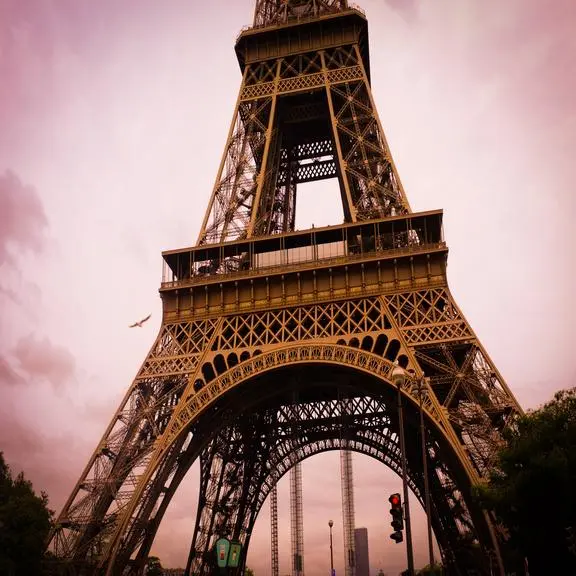
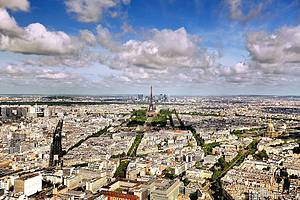
In 1889, the Eiffel Tower was built to commemorate the 100th anniversary of the French Revolution and to welcome the World Expo. This 324-meter-tall giant steel structure was initially controversial as it clashed with the architecture of Paris, and some even called for its demolition. However, today the Eiffel Tower has become a symbol of France and Paris.
Visitors can take the elevator or climb the stairs to reach the top of the tower and enjoy the breathtaking view of the city. On New Year's Eve, the tower sparkles for ten minutes at the top of each hour, and on specific holidays, it displays different colors, such as red for the Chinese New Year and blue for EU Day. During National Day, the Champ de Mars below the tower is an ideal venue for music festivals and New Year celebrations.
There are also two restaurants on the tower: Tour Eiffel 58 and the Michelin-starred restaurant Jules Verne. Tour Eiffel 58 offers lunch and dinner, starting at €19 for lunch and €80 for dinner, but with a higher cover charge. Jules Verne used to be a three-star Michelin restaurant but now has only one star. Lunch starts at €90, and dinner costs around €300 per person. Despite the expensive prices, they are still highly sought after due to their unique location. Therefore, it is advisable to book at least two months in advance during the peak season. If your budget allows, it is recommended to try other three-star Michelin restaurants for a better gastronomic experience.
4
km
2
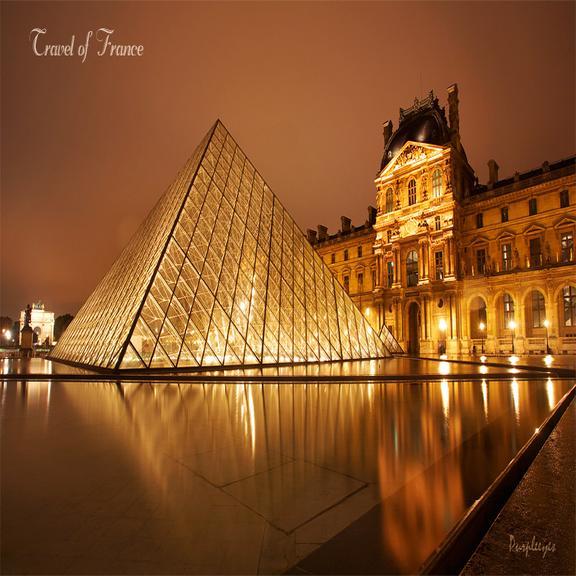
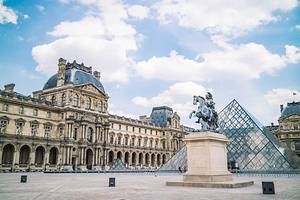
The Louvre Museum is the former residence of French kings, built in the late 12th century. After several expansions and renovations during different periods of reign, it has become one of the largest museums in the world. The Louvre is divided into eight sections, including Oriental Antiquities, Egypt, Greece, Etruria and Ancient Rome, Paintings, Sculptures, Art Objects, Islamic Art, and Medieval to 1848 Paintings.
Originally a medieval fortress defending Paris, the Louvre has played various roles throughout history. With a love for art, French kings sponsored artists and collected a large number of renowned Italian paintings. During the French Revolution, it was opened as a museum and continued to expand and collect more artistic treasures in subsequent historical periods. The Louvre houses around 400,000 artifacts, with approximately 40,000 on regular display. Visitors should prepare in advance and, based on personal interests, it is recommended to visit the Italian and French painting galleries, Ancient Egypt Civilization gallery, Ancient Greek and Roman art gallery, and Napoleon III's apartments. As one of the world's top three museums, the Louvre attracts numerous visitors and has become one of the most popular tourist destinations in the world.
3
km
3
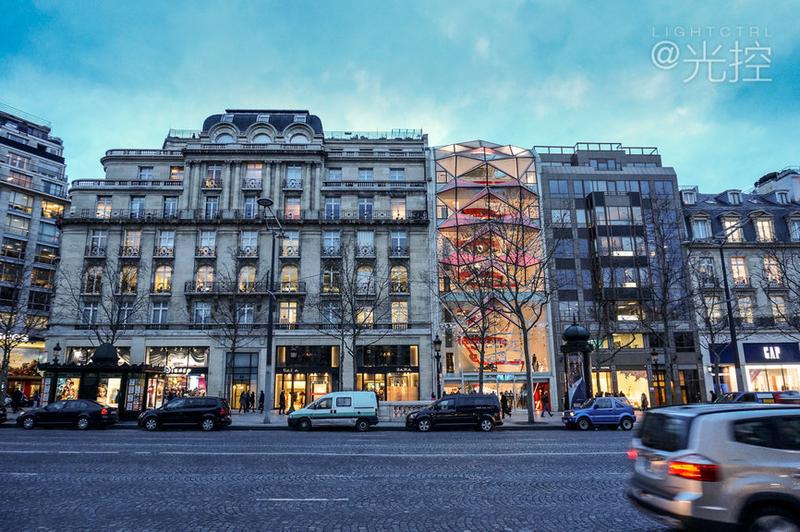
The famous Champs-Élysées is located in the 8th arrondissement of Paris and is known as the most beautiful street in the city. Its name is inspired by the Elysium in Greek mythology, the dwelling place of saints and heroes, symbolizing romance and freedom.
The Champs-Élysées is the central axis of Paris, with the Arc de Triomphe at its western end and the Concorde Square at its eastern end. It is also connected to the Louvre through the Arc de Triomphe du Carrousel. The street is decorated with special lights during major holidays, and important events like the Bastille Day parade and the final stage of the Tour de France are held here.
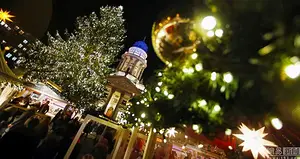
Nowadays, the Champs-Élysées is often crowded, but there are only a few luxury brands such as Cartier and Mont Blanc on the avenue. The true luxury shopping district is formed by the adjacent Avenue Montaigne, Avenue George V, and Rue François I, known as the Golden Triangle, attracting numerous shoppers. However, during Christmas and New Year, the street becomes particularly lively with the dreamy lights on the trees and the Christmas market, creating a joyful atmosphere for visitors. The street is also vibrant in July, with tropical carnival before the Bastille Day and the final stage of the Tour de France after the national holiday. Sometimes, the French even turn the entire Champs-Élysées into vegetable gardens to educate the public about the sources of food on their tables.
Day3-4: Amsterdam
3 attraction(s) ·
2 km
1
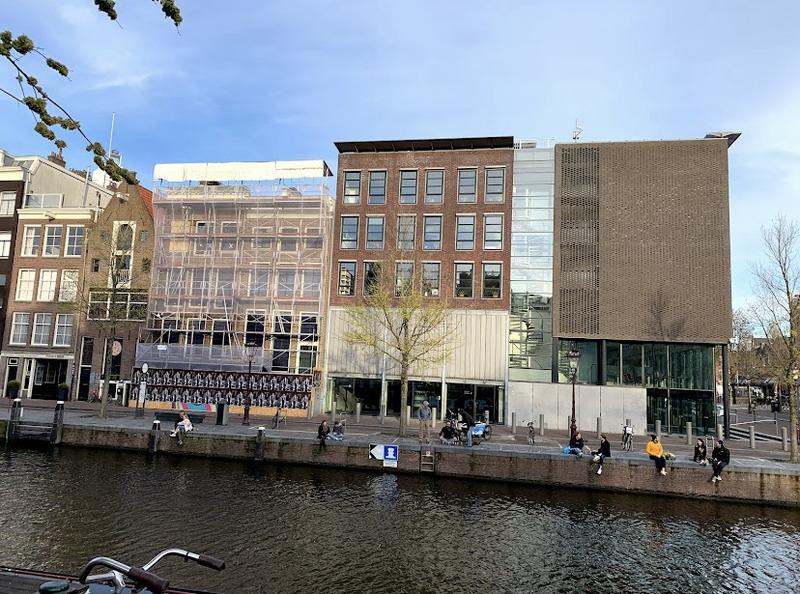
Museum house where Anne Frank & her family hid from the Nazis in a secret annex, during WWII.
1
km

3
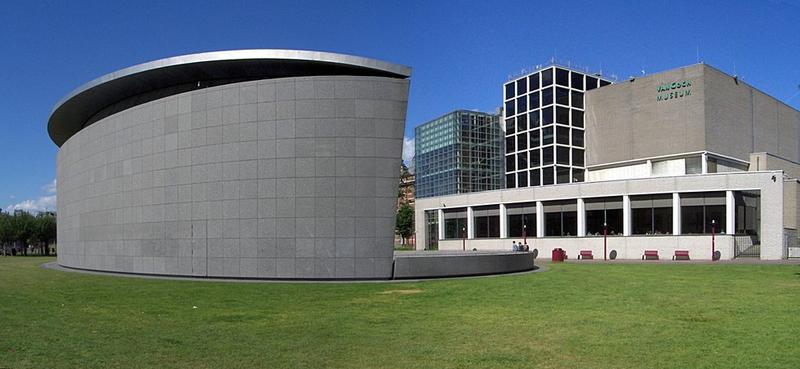
The Van Gogh Museum in Amsterdam has collected a quarter of all of Van Gogh's works, and is a must-visit destination for Van Gogh fans. The exhibition includes works from all periods of his life, from early works like "The Potato Eaters" and "Sunflowers" to later works like "The Yellow House", "Bedroom" and "Wheatfield with Crows", as well as classic works like "Harvest", "Fishing Boats on the Beach at Saintes-Maries" and "Wheatfield under Thunderclouds". These works vividly depict Van Gogh's creative process, allowing visitors to gain a deeper understanding of his artistic world. In addition, the museum also collects valuable treasures such as 750 letters from Van Gogh. It should be noted that some works may not be on display, so it is recommended to confirm and plan your itinerary on the official website before you go. Other works like "Starry Night" are at MoMA in New York, "The Starry Night Over the Rhone" is at the Musée d'Orsay in Paris, and "The Night Café" is at the Van Gogh Museum in the Netherlands. Whether you are a Van Gogh enthusiast or simply interested in art, the Van Gogh Museum is an excellent choice not to be missed.
Day5-6: Berlin
3 attraction(s) ·
8 km
1
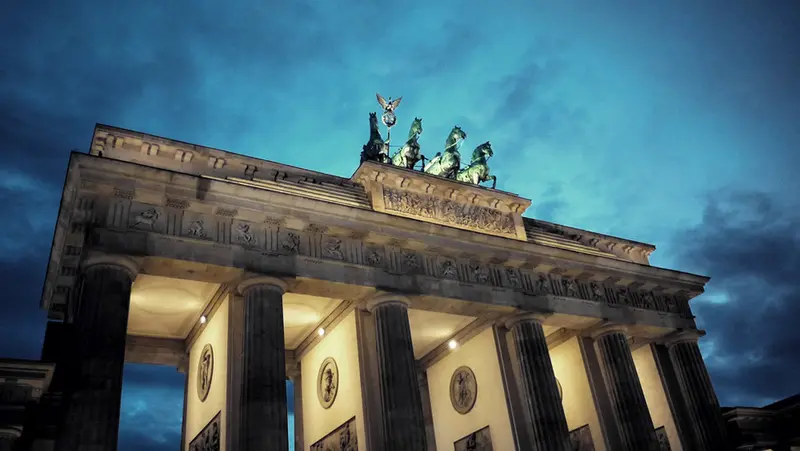
Brandenburg Gate is a landmark in Berlin, symbolizing the unification of Germany. It was built in 1791 in the Neoclassical style, modeled after the city gate of the Acropolis in Athens. The top of the gate features a bronze statue of the Victory Goddess with outstretched wings, holding a scepter adorned with an oak wreath, Iron Cross medal, and a soaring eagle, symbolizing victory in war. Facing east, Brandenburg Gate is the entrance to and the only preserved city gate of the old core area of Berlin. It has witnessed the rise and fall of German history. The Berlin Wall once stood to its west, dividing East and West Germany and preventing people from passing through for decades. Now, after recent restoration following the end of the Cold War, Brandenburg Gate and the surrounding Pariser Platz have become a popular tourist attraction in Berlin. On Pariser Platz, you will also find newly completed buildings such as the US Embassy and the famous Adlon Hotel.
5
km
2

A segment of the famous Berlin Wall, measuring 1.3 kilometers in length, is preserved in Berlin and is one of the most visited sections of the three remaining segments. Following the fall of the Berlin Wall in 1990 and the reunification of Germany, this section became a canvas for contemporary artists, with many artworks depicting political themes. After a renovation in 2009, the wall became even more beautiful and vibrant. During the summer, the area is transformed with beach chairs on the lawn, allowing visitors to enjoy the beach and sunlight. The once heavily guarded wall is now a cherished symbol of hope and fond memories.
3
km
3
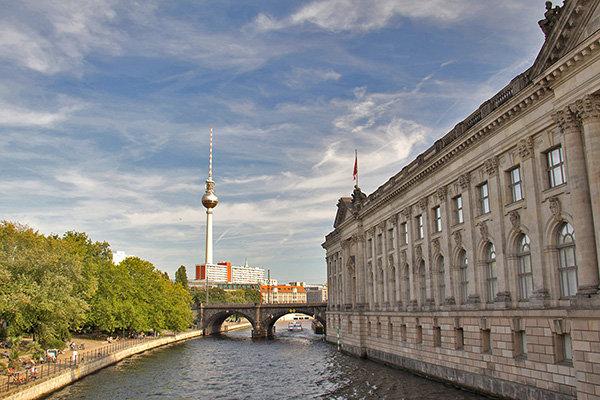
Berlin Museum Island is a small island that houses five museums. Construction began in 1824 and was completed in 1930, with each museum completing its construction. Due to its cultural and architectural significance, the island was declared a UNESCO World Heritage Site in 1999. The famous Pergamon Museum is known for its collection of monumental buildings from various eras. The museum island represents the essence of German museums, with the Pergamon Museum showcasing the history of ancient Egypt and the National Gallery exhibiting works by numerous world-renowned artists. Located in former East Berlin, the museums on the island suffered from neglect and disrepair during economic difficulties. However, after German reunification, significant funding was invested in extensive restoration, restoring the island to its former glory.
Day7-8: Prague
3 attraction(s) ·
3 km
1
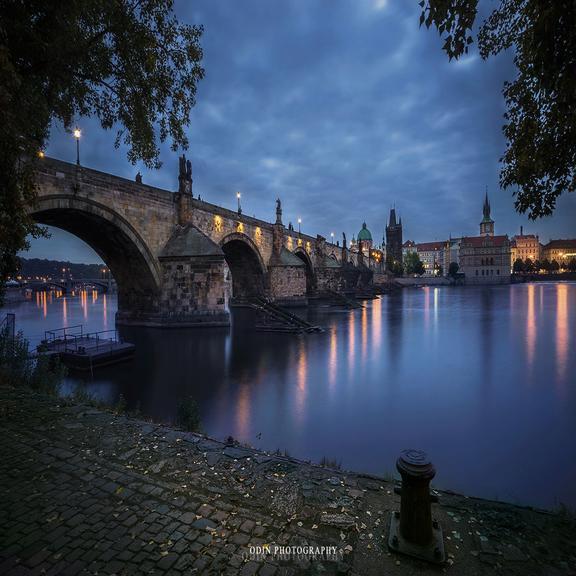
The Charles Bridge, situated in the city center of Prague, Czech Republic, was constructed in the 14th century over the Vltava River. This 520-meter-long and 10-meter-wide stone bridge is a highly valuable and historically significant piece of architecture. Located next to the Prague Castle complex and the Old Town, it was the mandatory route for coronation processions of the monarchs in the past.
As you stroll across the bridge, you can witness street performances by artists and a variety of handicrafts. There are also plenty of artworks to be found, such as watercolor paintings depicting the Charles Bridge and puppets dressed in traditional Czech and court attire.
With a total of 30 statues of saints, this is the oldest and longest bridge in Europe, and has become renowned as an open-air baroque statue museum of Europe, thanks to the masterpieces of Czech baroque artists from the 17th and 18th centuries. While many of the statues have been replaced with replicas, there are still plenty of artworks and cultural heritage to appreciate for the visitors. Notably, the eighth statue on the right-hand side of the bridge is the guardian of the Charles Bridge, St. John. In the middle of the fence lies a golden cross indicating the spot where he was thrown off the bridge.
1
km
2
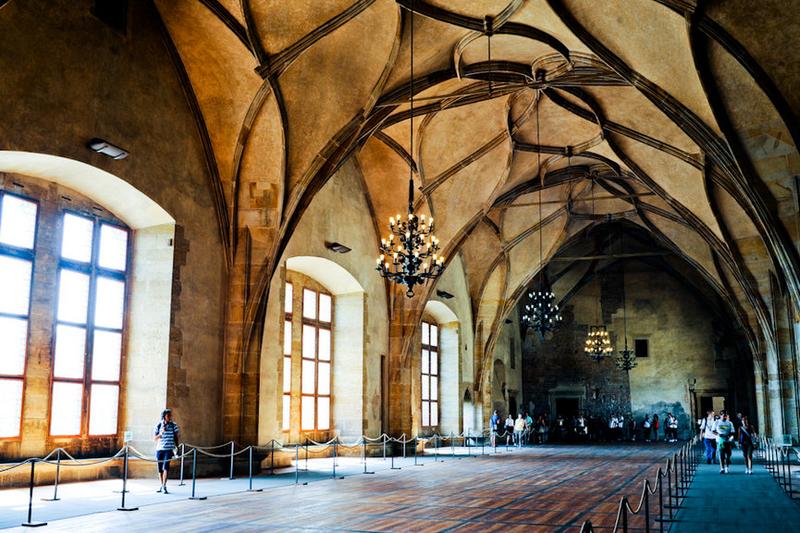
Prague Castle was once the residence of the Czech royal family and is now the office location for the president and national government agencies. It is also a popular spot for viewing the beauty of the Old Town area. The castle houses the crown jewels of Bohemian Kingdom and is one of the largest ancient castles in the world, spanning 570 meters in length and around 130 meters in width. The three most important sights in the castle include St. Vitus Cathedral, Golden Lane, and the Old Royal Palace. St. Vitus Cathedral is the oldest building in the city, with a history of over 1000 years. The highlights of this magnificent grey-black Gothic building include 20th-century stained glass windows, the tomb of St. John, and the St. Wenceslas Chapel. The large stained glass windows were created by the famous painter Mucha. Golden Lane is a small and delicate road with romantic colored small houses on either side. It used to be the residence of servants and craftsmen and got its name from the many alchemists who worked for the kings. In the late 19th century, it became a slum, but after a change in planning in the mid-20th century, the houses were converted into various souvenir and handicraft shops. The famous writer Kafka's old home is also located here. Every day at noon, the Old Royal Palace holds an impressive changing of the guard ceremony, attracting many tourists.
2
km
3
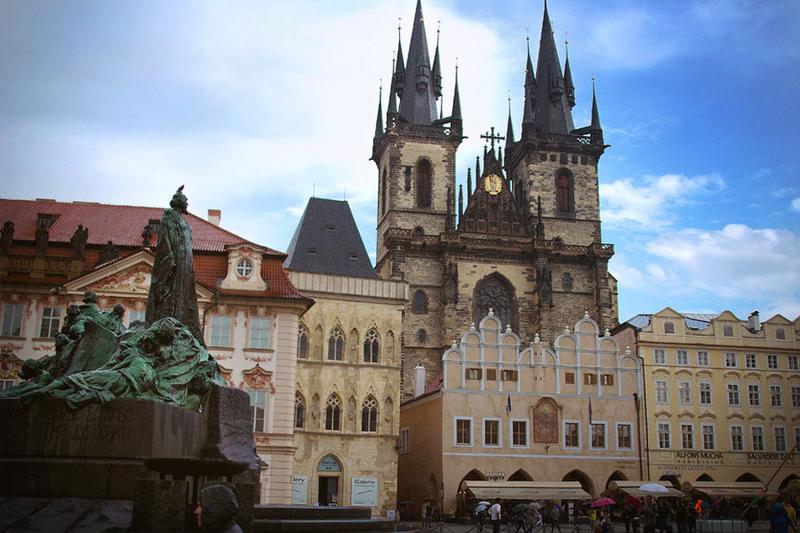
Old Town Square, also known as Hus Square, has a history of over 900 years. Located between Wenceslas Square and Charles Bridge, it is one of the most famous squares in Prague, attracting countless tourists and residents, especially crowded in the summer. The buildings around the square are of various styles, including the Gothic-style Tyn Church and the baroque-style St. Nicholas Church, as well as many cafes and restaurants. Many churches on the square and the famous astronomical clock on the exterior wall of the old town hall attract numerous tourists. In addition, the square also offers a panoramic view of the old town for tourists. A statue of Hus, the pioneer of the Reformation, stands in the square and has become a tourist landmark. Tourists sticking "wishing notes" on the pedestal of the Hus statue has also become a scene in the square. Although Jolin Tsai mistakenly referred to the pedestal of the Hus statue as Rome's wishing pool in her song "Prague Square," the song still attracts global attention to Old Town Square. In 2014, the Prague city government cleaned and maintained the Hus statue, and the "wishing wall" on the pedestal no longer exists, but the square is still an oasis in the hearts of tourists.
Day9-10: Venice
3 attraction(s) ·
1 km
1
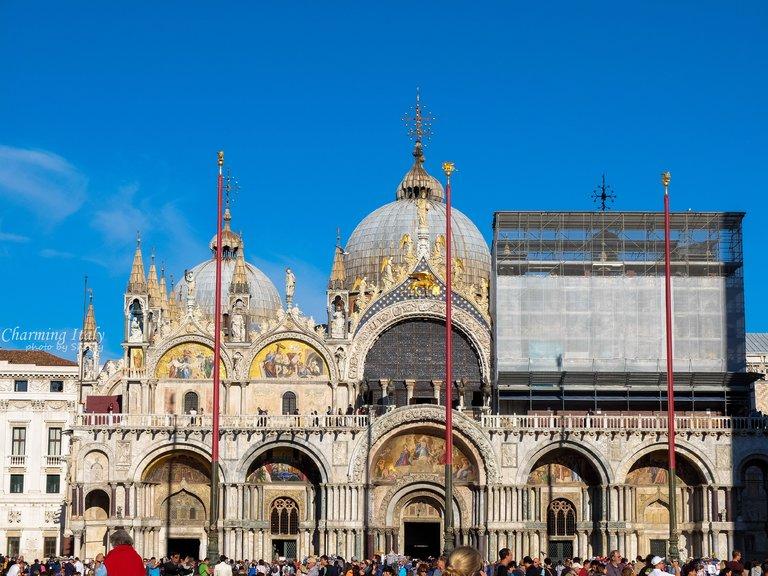
St. Mark's Basilica, located in Venice, Italy, is a famous Catholic cathedral and a papal basilica. It is renowned as one of the world's most famous churches and is known for its Byzantine architectural style. The cathedral serves as the final resting place of St. Mark, the patron saint of Venice, and was once the largest church in medieval Europe. It is also considered a classic example of Venetian architectural art and houses a rich collection of artworks. The church is famous for its Greek cross exterior design and five domes, following the Byzantine style. After multiple renovations, it has become a masterpiece that combines Byzantine, Gothic, Islamic, and Renaissance art. The most famous feature of the cathedral is its mosaic-covered facade, decorated with gold. The interior is also renowned for its golden altar and mosaic decorations. When the sunlight shines on it, the cathedral glows with a golden brilliance, earning it the nickname "Golden Cathedral."
1
km
2
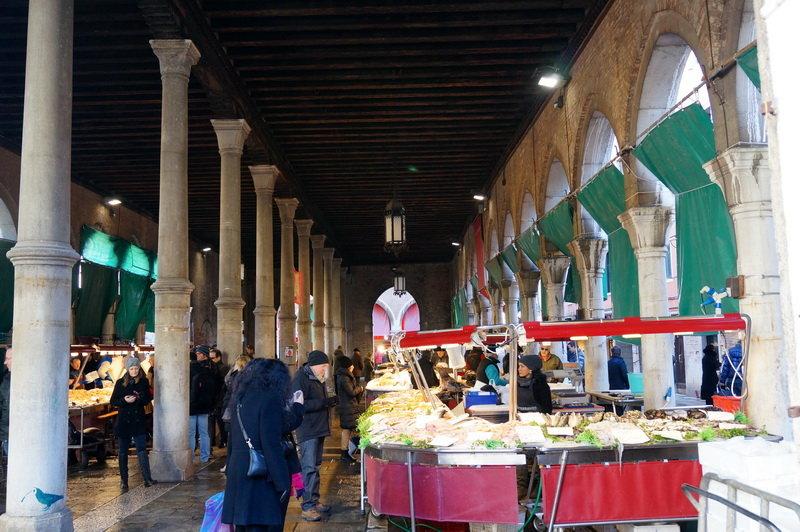
Near the Rialto Bridge, there is a fruit market and a fish market. At the fish market, you can buy all kinds of fresh seafood, while also seeing many seagulls fighting over these delicious foods. Next to the seafood market is a small shop that sells various cooked seafood dishes, but customers must stand to enjoy these delicacies. Although the small shop is popular, it seems to only serve Chinese cuisine.
1
km

Day11-12: Amalfi > Ravello
2 attraction(s) ·
2 km
1
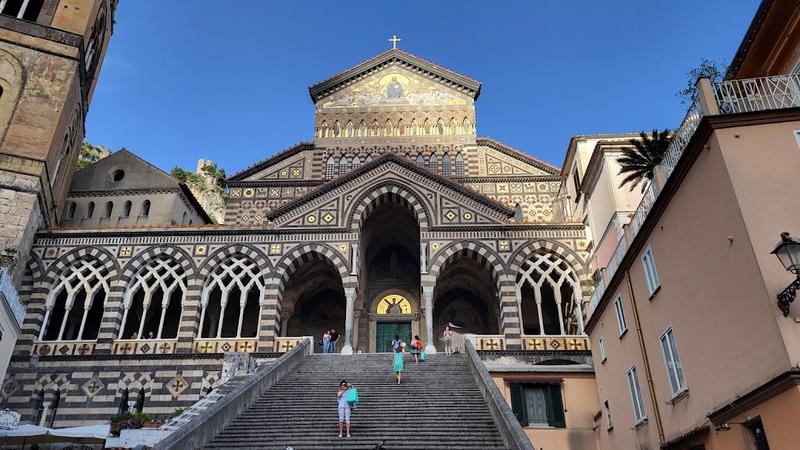
Cathedral renovated many times since the 9th century, with a crypt & an ornate 1800s facade.
2
km
2
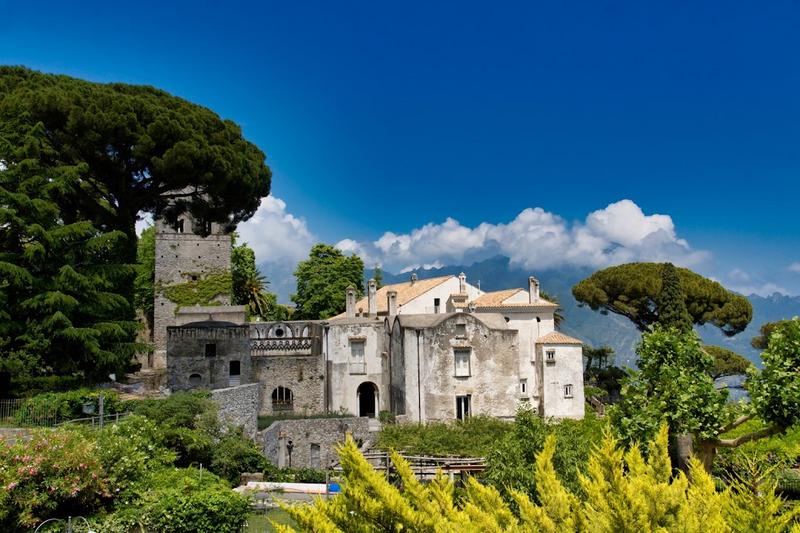
Moorish-influenced 1200s villa known for its cascading gardens & terraces overlooking the sea.
Day13-14: Barcelona
3 attraction(s) ·
8 km
1
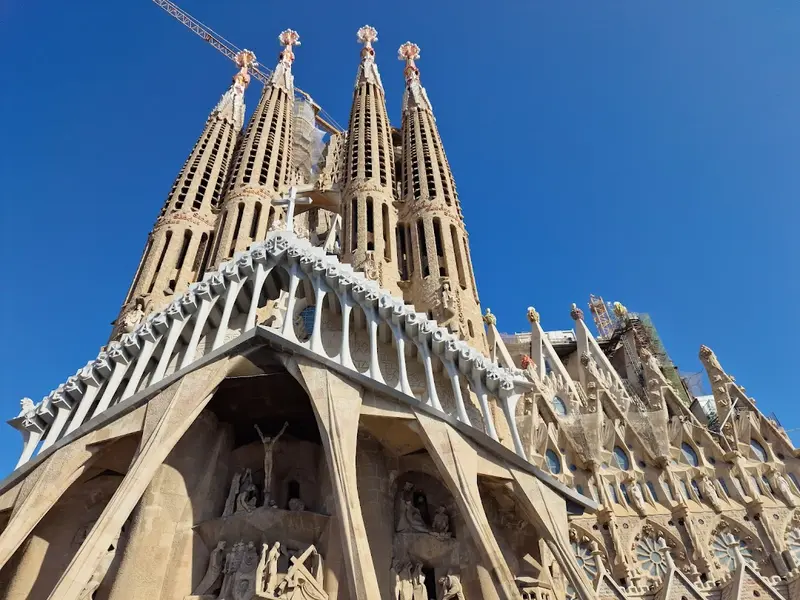
Antoni Gaudí's renowned unfinished church, started in the 1880s, with museum and city views.
3
km
2
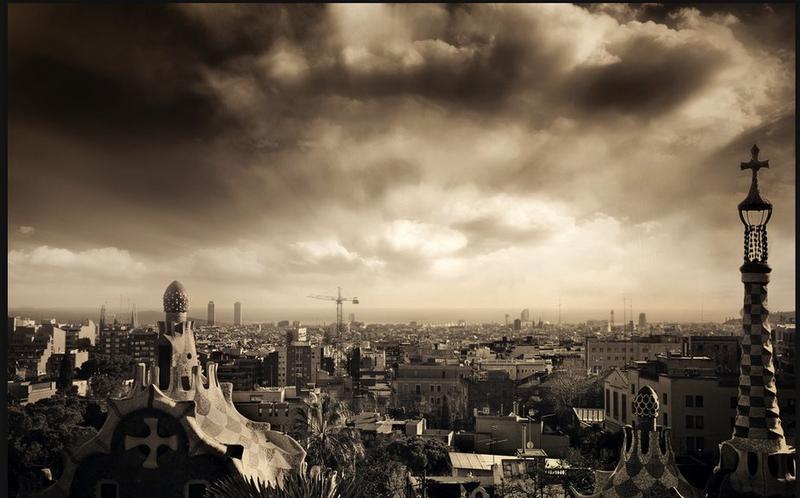
Güell Park, also known as Park Güell, is an early masterpiece by Antoni Gaudí, full of oriental charm. From the outside, you can see that the window design adopts the ventilation technology used by desert peoples to protect against sand and dust, and the walls use bricks instead of stones to form the geometric shapes commonly found in Mudéjar-style architecture. In addition, the decorative broken tiles also show Gaudí's innovative creativity. Güell Park is one of Antoni Gaudí's works listed as a World Heritage Site by UNESCO.
Here, Gaudí transferred his genius talent to garden planning. Upon entering the gate of Park Güell, tourists can see a giant lizard sculpture that often appears in travel magazines. The stairs next to the lizard guide visitors upwards, into a fantastical world of color and dreamlike atmosphere. Gaudí's home is also located here, and this pink little house has now been transformed into a museum showcasing Gaudí's life and work.
6
km
3
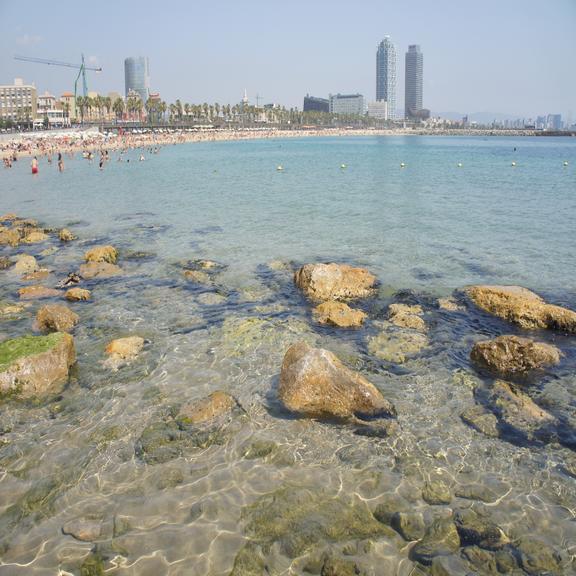
Barceloneta beach is a beloved sandy beach in Barcelona, and it attracts many visitors in the summer. There are also some interesting sculptures on the beach.