5-Day Taiwan North–South Model Course: Fully Enjoy from Taipei to Kaohsiung
8 cities |
31 attraction(s) |
total distance 1048
km
 TIPS
TIPS
Day1
Day2
Day3
Day4
Day5
Day1: Taipei
4 attraction(s) ·
10 km
1
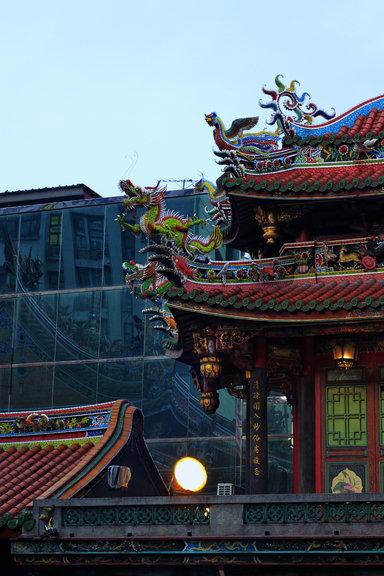
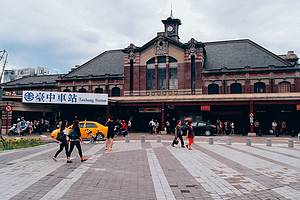
Longshan Temple is the first temple in Taipei, located at the intersection of Guangzhou Street and Xiyuan Street in the Wanhua District. The area was once known as Bangka, and it was plagued by poor conditions and epidemics. To improve the local situation, immigrants from Quanzhou, Fujian Province, brought the deity of Guanyin from the Longshan Temple in Anhai, Quanzhou, and began building Longshan Temple in Taiwan. Since its construction began in 1738 during the Qing Dynasty, Longshan Temple has been destroyed and repaired multiple times. During World War II, the temple was also destroyed and later restored. The present-day Longshan Temple is beautifully constructed, with a intricately designed temple courtyard, and is considered a highlight of Taiwanese temple art. In the early days, foreign travelers to Taipei would visit the National Palace Museum, Chiang Kai-shek Memorial Hall, and Longshan Temple for a visual feast. Every year from the 15th day of the first lunar month to the 19th day of the second lunar month, the temple holds traditional lantern exhibitions and activities such as peace lanterns. Longshan Temple is close to attractions such as Huaxi Night Market, Bangka Qingshan Temple, and Ximending.
1
km
2
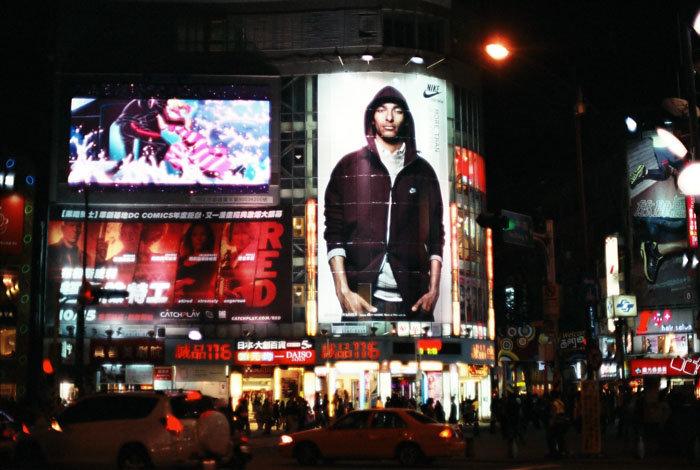
Ximending is a popular shopping district in Wanhua District, Taipei City, consisting of sections of Wuchang Street, Hanzhong Street, and Emei Street. This area is known as the heart of Ximending, attracting young students and international tourists with its vibrant atmosphere and trendy elements. It is a bustling pilgrimage site.
Ximending is renowned as a popular fashion district and unique pedestrian shopping street in Taipei. It offers various famous attractions such as Ximending Red House, Tattoo Street, Movie Street, KTV, Wannian Building, Wu Fen Pu Wholesale Market, and Eslite Bookstore. In addition, there are many
6
km
4
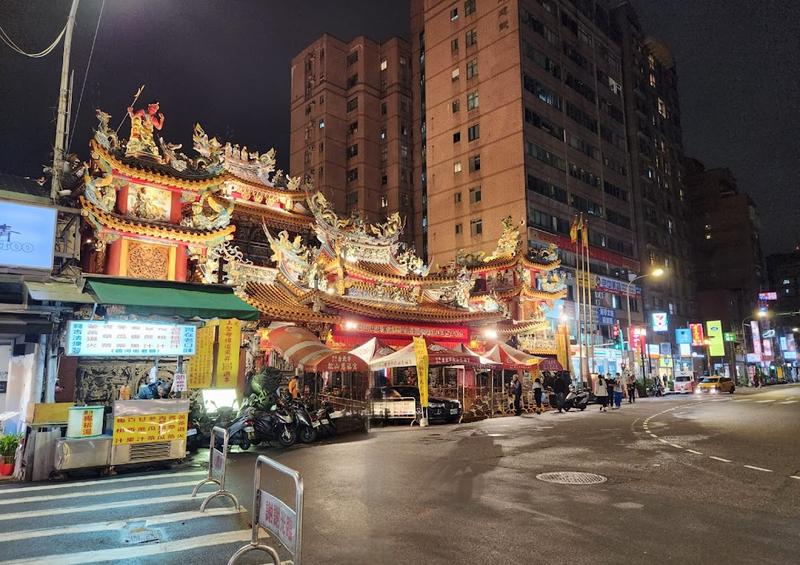
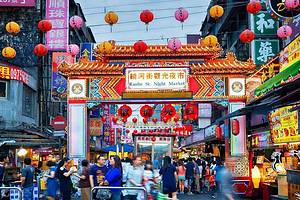
Buzzing, venerable nighttime street market offering shops & street food vendors.
Day2: Taipei > Taichung
6 attraction(s) ·
155 km
1
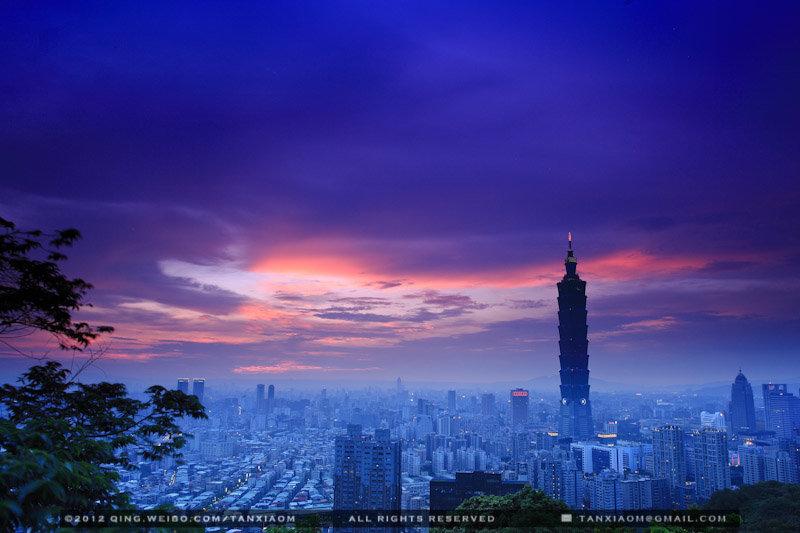
Taipei National Palace Museum is known as the "Treasure House of Chinese Culture" and houses a rich collection of artifacts from the Song, Yuan, Ming, and Qing dynasties. With a total of 655,000 exhibits, the museum also features the Chih-shan Garden, the Chi-te Garden, and the Chang Dai-chien Memorial Gallery, all designed with traditional Chinese garden aesthetics. The museum's architecture resembles a Chinese palace, with three floors dedicated to exhibitions and a fourth floor for a tea house. Visitors can preview the exhibits on the museum's website before their visit to better appreciate the museum's highlights. Treasures such as Fan Kuan's "Travelers Among Mountains and Streams," Guo Xi's "Early Spring," and Li Tang's "Wanhaosong Fengtu" can only be seen during special exhibitions. The busiest periods for visitors are from 10:00 to 12:00 and 14:00 to 16:00, with tour groups often focusing on the jade, porcelain, and bronze sections. For a quieter experience, it is recommended to visit the calligraphy and painting galleries during these peak times and then explore the popular exhibits when the crowds thin out. The quietest visiting hours are during the evening sessions on Fridays and Saturdays, as the number of visitors decreases after 17:00.
8
km
2
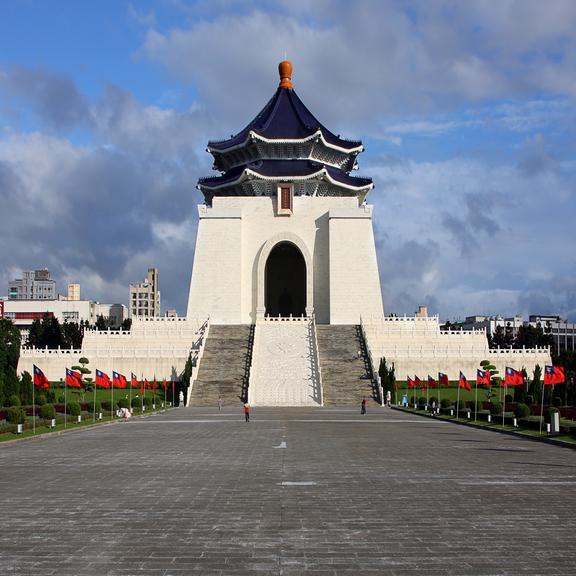
Chiang Kai-shek Memorial Hall and Liberty Square are famous landmarks in Taipei and must-visit destinations for travelers. The complex includes the Chiang Kai-shek Memorial Hall, a concert hall, a theater, and surrounding gardens, providing a full day of exploration for visitors. The memorial hall was built to commemorate Chiang Kai-shek and is modeled after the Temple of Heaven in Beijing and Egyptian pyramids. Inside the central hall, there is a bronze statue of Chiang Kai-shek, as well as exhibition and screening rooms displaying his personal belongings. The ground floor of the memorial hall also features permanent exhibitions and cultural performances.
Flanking the memorial hall are the palace-style concert hall and theater, which are renowned venues for top-tier performances in Taiwan, attracting leading national and international groups. The most impressive aspect of the Chiang Kai-shek Memorial Hall is not just the statue and architecture but the ever-changing performances in the two halls, drawing in a large audience.
In the 1980s, Taiwan's opposition activists referred to the Chiang Kai-shek Memorial Hall as the "Chiang Kai-shek Temple" due to its religious symbolism and temple-like design. Various rallies and gatherings have also taken place here. The route from Zhongzheng District to Sun Yat-Sen Memorial Hall along Ren'ai Road is a classic protest march route. Later, Chen Shui-bian renamed the site as Liberty Square and the Democracy Memorial Hall. After he stepped down, the location reverted to its original name, Chiang Kai-shek Memorial Hall. The name "Liberty Square" still remains for the square.
2
km

4

Popular ice cream parlor in an elegant historic building, offering specialty flavors & a restaurant.
8
km
5
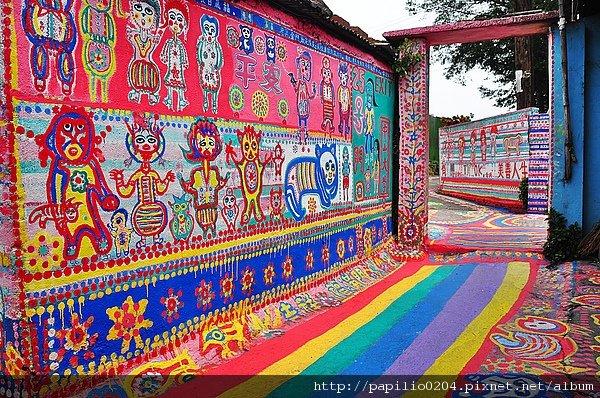
Rainbow Military Dependents' Village is one of the oldest and most legendary military dependents' villages in Taiwan, known for its motto of "making boredom interesting." One of the village's honored veterans, Huang Yongfu, is an 87-year-old man from Kowloon, Hong Kong who moved to Taiwan to join the army in response to the "10,000 Youth, 10,000 Soldiers" campaign. One day, he began painting the floors and walls with bright colors out of boredom, and then used his brush to create various patterns on the walls, ranging from people, water buffalo, birds, to airplanes, indulging and becoming more interested in his art. He used the alleys and streets of the village as natural canvas and painted all sorts of beautiful rainbow lines and cute animals with bold colors and childlike compositions, making the place vibrant and lively. Visitors feel like they are in a rainbow world, hence the village's nickname "Rainbow Military Dependents' Village." In 2010, due to urban planning needs, this place was designated for a road, which sparked a wave of "rescue" movements, and a large number of supportive emails flooded the mayor's mailbox, ultimately preserving the Rainbow Military Dependents' Village.
6
km
6

Vendors selling a variety of food, clothing, accessories & other goods in a bustling atmosphere.
Day3: Taichung > Nantou County > Tainan
6 attraction(s) ·
170 km
1
The Taichung Park was established on October 28, 1903 and is one of the famous landmarks in Taichung City. The park covers an area of about 32,889 square meters and is located between Park Road and Section 2 of Zhongxiao Road, with a prime location. The park is lush with green grass and trees, and the Lake Heart Pavilion is built on the ancient Sun and Moon Lake, presenting an ancient and traditional style. It is a double-pavilioned pavilion. Visitors can rent boats to cruise on the lake. The embracing Taishan Mountain and Wangyue Pavilion in the park have special historical significance. Taishan Mountain, formerly known as "Dadun", is the origin of downtown Taichung City, and the adjacent Wangyue Pavilion is the only remaining relic of the Taiwan Prefecture City.
40
km
2
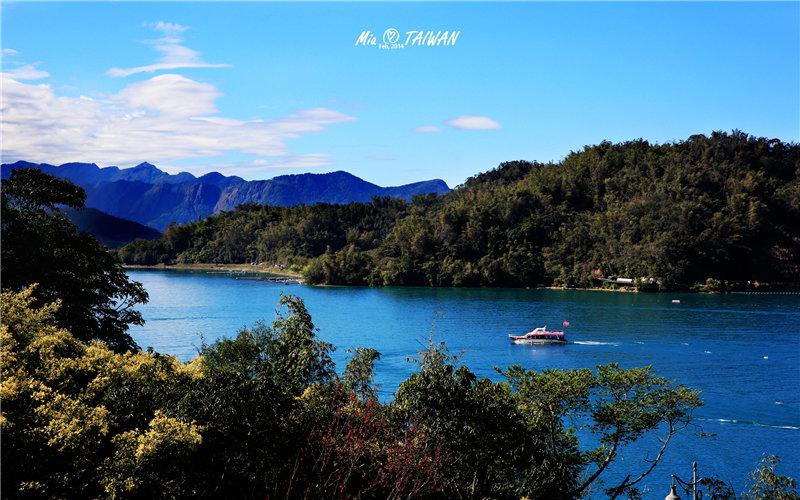
Sun Moon Lake is one of the two major scenic spots in Taiwan and is regarded by mainland tourists as a must-visit place. Although it may not be as spectacular as the numerous famous mountains and lakes on the mainland, it is still a shining pearl on this small island with limited land and abundant mountains. Every morning, a thin mist envelops Sun Moon Lake, which is the most beautiful moment. Unfortunately, most tourists do not stay here overnight and only have a brief glimpse of it.
Yuchi Township plans to rename itself Sun Moon Lake Township, indicating that it is the living area of the indigenous Thao tribe. Walking around the lake, you will see various crafts and food of the Thao people. Due to the relatively long time required to tour around the lake and the difficulty of carefully appreciating the beauty of Sun Moon Lake, it is recommended for tourists to take a yacht from Shuishe Pier to enjoy the pleasant breeze and the beautiful scenery of Sun Moon Lake. In addition, you can also rent a bicycle and ride along the Sun Moon Lake cycling path to your destination at your own pace. In conclusion, no matter how you choose to visit, Sun Moon Lake will leave a deep impression on you.
3
km
3

Wenwu Temple is a temple located in Sun Moon Lake, completed in June of the 27th year of the Republic of China. It was formed by the merger of Longfeng Palace and Yihua Hall, in order to avoid the lake water from inundating the two temples, this magnificent temple came into being. The main deity is Guan Shengdi Jun, and besides him, the temple also enshrines gods such as Confucius and Yue Fei. During the exam season, Wenwu Temple attracts a large number of students to come and pray. This temple covers a vast area and has a Northern Dynasties-style architectural layout, with two huge lion sculptures in front. Its architectural craftsmanship is exquisite, resplendent, and breathtaking. Climbing up to the observation deck at the back hall of Wenwu Temple, you can also enjoy the panoramic view of Sun Moon Lake's beautiful mountain and water scenery. Wenwu Temple has become one of the famous attractions in Sun Moon Lake.
123
km
4
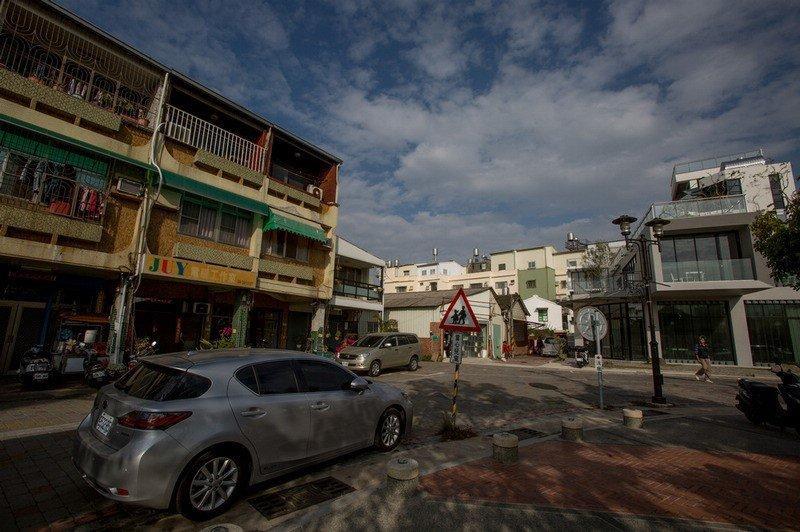
Anping Old Street is located east of Anping Fort in Tainan. It was the first street established by the Dutch three hundred years ago and is known as the "Taiwan Street" and "Stone Street." The houses on the street are mainly traditional courtyard houses, low red brick houses, and Western-style buildings. The white plastered walls, pebble facades, and handcrafted reliefs on the railings, pillars, and eaves of the Western-style buildings are exquisite. When planning Yanping Street, the urban planning of Qing Dynasty Taiwan was followed, and the width was only two to three meters, suitable for pedestrians and bicycles, without consideration for cars. In 1994, the Tainan City government planned to widen Yanping Street to ensure the safety of residents, but it was opposed by cultural and historical preservationists, and the project was put on hold. Later, through strong advocacy by the residents, Yanping Street was demolished and reconstructed. Now, Zongxing Street and Xiaozhong Street, parallel to Yanping Street, have well-preserved old streets. In addition, Anping Fort next to the old street is the oldest historical fortress in Taiwan, with only ruins remaining. At the end of the fort street, there are several old foreign trading offices, including the former offices of British firm Tait & Co and German firm Tamsui Steamer Trading. The old warehouse of Tait & Co has formed a unique sight called Anping Tree House due to the growth of banyan trees, with trees inside the building and building on the trees, becoming a famous attraction. Due to its long-standing dim lighting and cool, damp air, it has a special mysterious atmosphere reminiscent of the Angkor Wat.
1
km
5
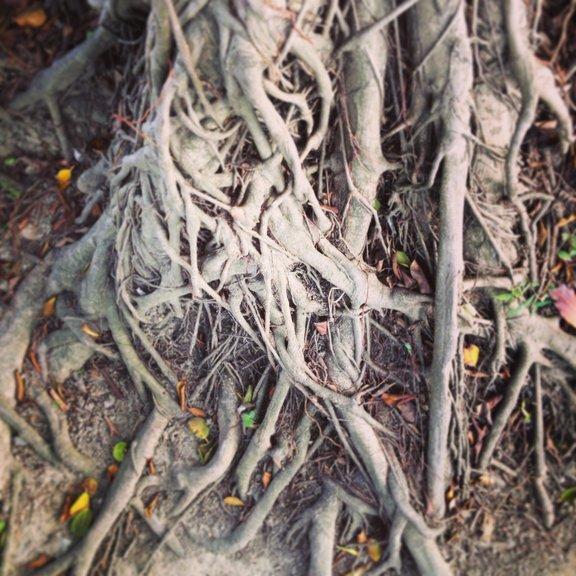
The Anping Tree House is a unique attraction in Tainan. Initially, it was just a regular brick house, but over time, a banyan tree started growing beside it. The house and the tree have coexisted and today, the Anping Tree House is covered in lush green leaves. After visiting Anping Fort and trying local snacks, it's recommended to visit the Anping Tree House to appreciate the beauty of nature and take a rest. Visitors can also explore the nearby Deji Merchant House for more historical sites.
6
km
6
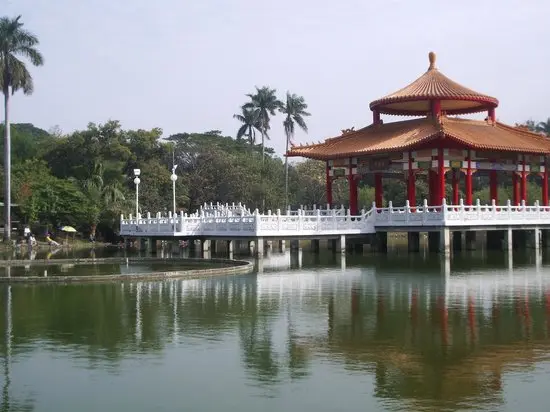
Tainan Park is located between Gongyuan Road and Beimen Road on the north side of Tainan Station. It was built in the 6th year of the Republic of China and was once called Zhongshan Park. It is now collectively known as Tainan Park. The park is spacious, and in the evening, strolling through it allows you to enjoy the beautiful sunset. The gentle breeze adds to the relaxation and comfort.
Day4: Tainan > Kaohsiung
7 attraction(s) ·
48 km
1
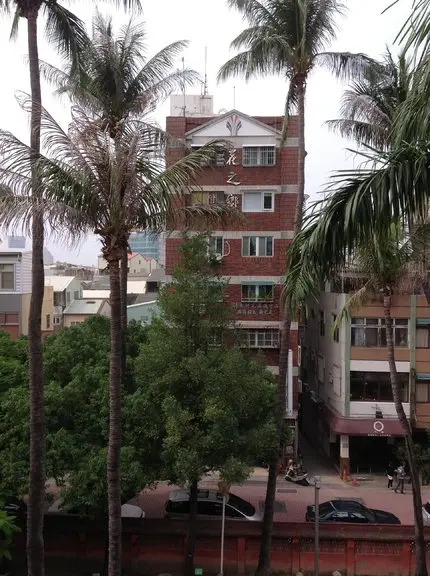
Chikan Tower is one of the must-visit attractions in Tainan. This European-style building, built during the Dutch colonial period, was once the administrative center of Chengtian Government during the Ming and Zheng periods, making it the administrative center of Taiwan. Over time, the architectural style of Chikan Tower has evolved and has faced natural disasters and war, experiencing vicissitudes. Today, Chikan Tower has become a blend of modernity and tradition, including the remains of the Pro-Ming Dynasty City, the Sea God Temple, and the Wen Chang Pavilion, showcasing its rich historical and cultural heritage.
The charm of Chikan Tower not only lies in its diverse architectural styles but also in its rich stories. Whether it's opening the windows on the tower or the legend of the stone turtles, it never fails to captivate visitors. In addition, while the courtyard of Chikan Tower may be small in size, it is equally exquisite and charming, giving people a deep sense of ancient elegance, as if transported to the ancient city of Tainan. If you want to delve deeper into the history and culture of Tainan, Chikan Tower is a great choice.
It is worth mentioning that Chikan Tower has now become part of the daily life of Tainan residents. At night, with jazz music and colorful lights, Chikan Tower takes on a whole new atmosphere and becomes a hub for local foods and snacks. While indulging in the tantalizing aromas and flavors, you can also experience the intertwining of history and modern culture. It is a not-to-be-missed attraction.
1
km
3
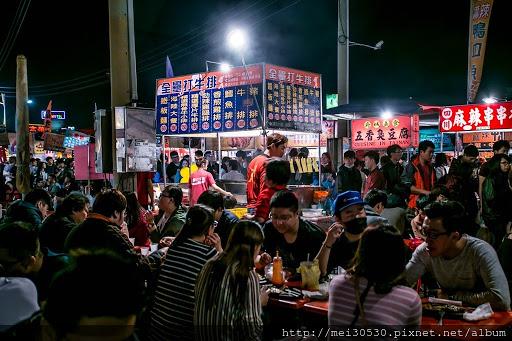
Tainan Night Market is the "largest" night market in terms of size. It has nearly 400 stalls, and is a must-visit night market for many foreign tourists who come to Tainan! It offers a wide variety of classic Taiwanese snacks such as crispy chicken, swordfish rolls, and large intestine vermicelli. It often leaves people entering with an empty stomach and leaving with a full one!
13
km

5

Liuhe International Night Market is the first pedestrianized area and international-level tourist night market in southern Taiwan, formerly known as Dagangpu Night Market. It started from the late 1940s to the early 1950s, centered around the former Gaoxiong Medical College Liuhe Clinic, and gathered snack stalls on the open space in Dagangpu, Kaohsiung, making it one of the most representative night markets in Kaohsiung. Recommended: Deng's papaya milk, Liuhe seafood congee.
1
km


Day5: Kaohsiung > Nantou County > Tainan > Jiayi > Hualien > Taitung
10 attraction(s) ·
649 km
1

Lianchi Lake, formerly known as Lianhua Lake, is located between the east side of Zuoying District, Kaohsiung City and the west side of the longitudinal railway, adjacent to Guishan in the south and backed by Banping Mountain in the north. The lake covers an area of about 42 hectares and is sourced from the Gaoping River. In the 25th year of the Kangxi reign (1686 AD), when the Confucius Temple was newly built, Lianchi Lake was used as a pond, and lotus flowers were planted in the lake. These enchanting flowers bloom in the scorching summer, exuding a charming fragrance. In the Qing Dynasty, Lianchi Lake was listed as one of the Eight Scenic Spots of Fengshan, known as "Panshuihe Xiang". When morning or evening falls, a thin mist rises from the surface of Lianchi Lake, and the scenery by the lake gradually becomes visible and disappears. This indescribable sense of mystery is unforgettable. At dusk, as the sun sets gradually, the unique shape of Banping Mountain and the reflection of Longhu Tower on the lake surface create a spectacular evening glow scene.
1
km
2
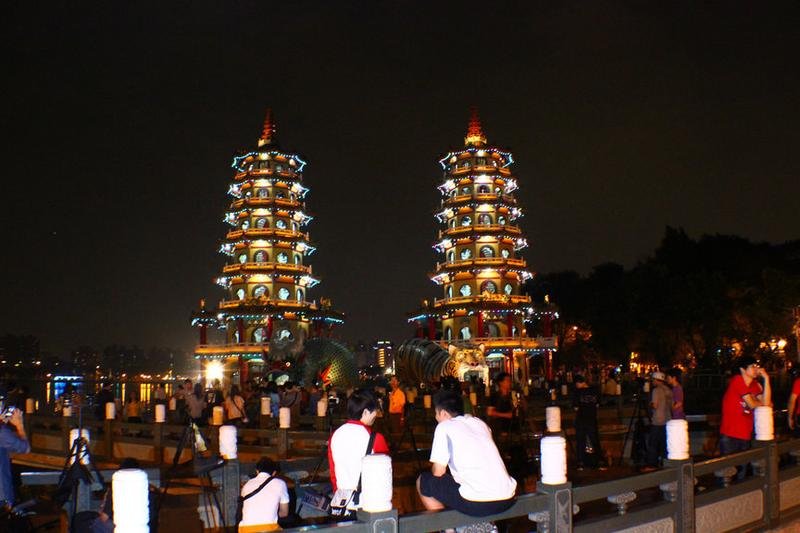
Located in the southwestern Lianchi Lake Scenic Area of Zuoying District, Kaohsiung City, Taiwan, the Dragon and Tiger Pagodas were built in 1976. The pagodas are 31.6 meters high and consist of seven layers, adopting the Tang and Song styles and brick-and-stone structures. They are named after the dragon and tiger carvings on the pagoda, symbolizing the transformation between good and evil. The Dragon and Tiger Pagodas have unique exterior features, with flame-shaped decorations carved on each archway, leaving a deep impression on visitors. Moreover, the reliefs inside the pagodas are also exceptionally creative. The Dragon Pagoda is engraved with the stories of China's traditional twenty-four filial exemplars, while the Tiger Pagoda depicts the Twelve Wise Men and thirty-six palaces representing the heavenly blissful world of the Jade Emperor. These carved patterns not only hold historical, cultural, religious, and artistic value but also serve as a treasure trove of knowledge.
18
km
3
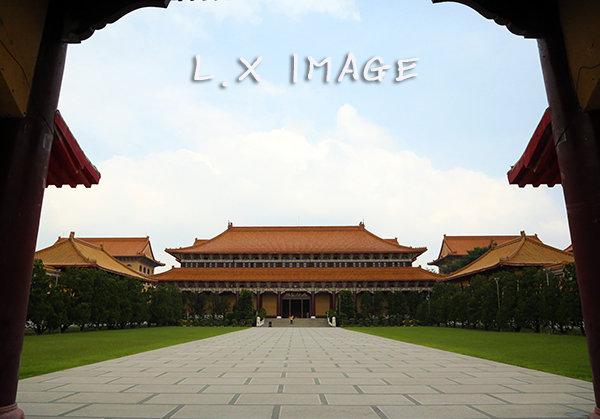
Fo Guang Shan is one of the four major Buddhist mountains in Taiwan, located in Dashu District, Kaohsiung City. It was founded several decades ago and was once a barren mountain. Led by the founder Master Hsing Yun, his disciples cleared the way and established Fo Guang Shan, which has now become the most famous Buddhist holy site in Taiwan with the largest number of followers. Fo Guang Shan promotes "Humanistic Buddhism" and has dozens of branches around the world. The "Buddha's Light International Association" founded by Master Hsing Yun in 1992 is a member of the UN Economic and Social Council NGOs. Worshippers and incense burners come here all year round, making it the best place in Taiwan to worship Buddha.
The most distinctive feature of Fo Guang Shan is the Great Buddha Land, which is the landmark of Fo Guang Shan. It has the world's tallest copper statue of a seated Buddha, 108 meters high, with 480 small Amitabha Buddha statues surrounding it. It is a grand and unique building. In addition, the Fo Guang Shan Buddhist Museum houses thousands of cultural relics from ancient and modern countries, and is a must-see attraction. During the Lantern Festival each year, Fo Guang Shan is adorned with lanterns, and at night it becomes a sea of lights, making it the most lively season at Fo Guang Shan.
23
km
6
Sun Moon Lake is one of the two major scenic spots in Taiwan and is regarded by mainland tourists as a must-visit place. Although it may not be as spectacular as the numerous famous mountains and lakes on the mainland, it is still a shining pearl on this small island with limited land and abundant mountains. Every morning, a thin mist envelops Sun Moon Lake, which is the most beautiful moment. Unfortunately, most tourists do not stay here overnight and only have a brief glimpse of it.
Yuchi Township plans to rename itself Sun Moon Lake Township, indicating that it is the living area of the indigenous Thao tribe. Walking around the lake, you will see various crafts and food of the Thao people. Due to the relatively long time required to tour around the lake and the difficulty of carefully appreciating the beauty of Sun Moon Lake, it is recommended for tourists to take a yacht from Shuishe Pier to enjoy the pleasant breeze and the beautiful scenery of Sun Moon Lake. In addition, you can also rent a bicycle and ride along the Sun Moon Lake cycling path to your destination at your own pace. In conclusion, no matter how you choose to visit, Sun Moon Lake will leave a deep impression on you.
118
km
7
Tainan Park is located between Gongyuan Road and Beimen Road on the north side of Tainan Station. It was built in the 6th year of the Republic of China and was once called Zhongshan Park. It is now collectively known as Tainan Park. The park is spacious, and in the evening, strolling through it allows you to enjoy the beautiful sunset. The gentle breeze adds to the relaxation and comfort.
82
km
9
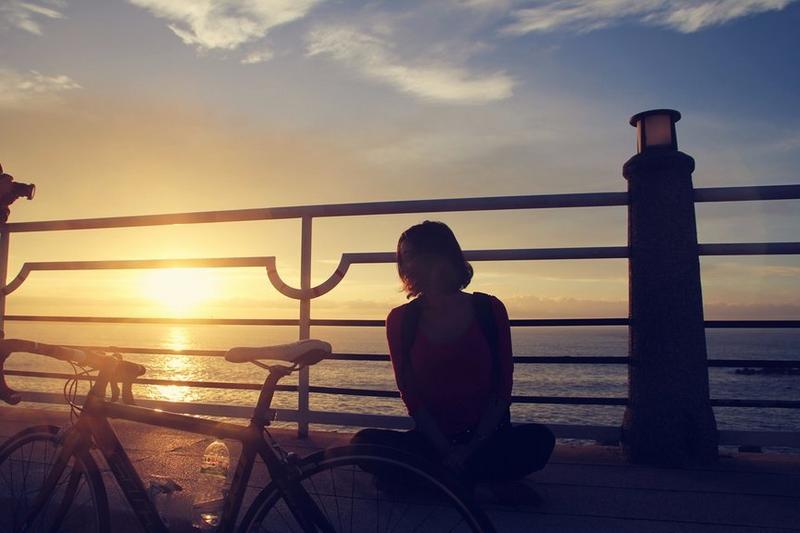
Hualien Port in Hualien City, Hualien County, Taiwan, is one of Taiwan's international commercial ports. It is located near the Pacific Ocean and the Central Mountain Range, and consists of two breakwaters. The construction of the port began in 1939, and it officially became an international commercial port and established the Hualien Port Authority on September 1, 1963.
148
km
10