European Adventure: 14-Day Tour
9 cities |
31 attraction(s) |
total distance 20035
km
 TIPS
TIPS
Day1
Day2
Day3
Day4
Day5
Day6
Day7
Day8
Day9
Day10
Day11
Day12
Day13
Day14
Day1: London > London
2 attraction(s) ·
5893 km
2
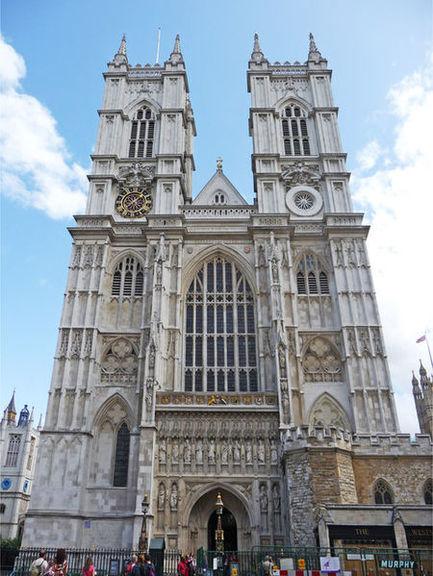
Westminster Abbey, located next to the Houses of Parliament in the UK, is a historic and grand church. As the Anglican church, it has not only hosted the coronations of kings and the weddings of royal members throughout history, but also serves as the final resting place for many famous people, including Newton, Darwin, and Churchill, regarded as the highest honor. This Gothic-style representative building is not only solemn and magnificent, but also filled with beautiful multicolored glass that shines through the sunlight. Westminster Abbey has been under construction since the 10th century and has become the church for royal coronations since the crowning of William the Conqueror. For hundreds of years, millions of worshippers have come to participate in worship, and countless others have come to pay their respects and remember the past. Westminster Abbey is not only the highest-ranking church in the UK, but also a holy site for people to pay tribute to those who have contributed to the country.
Day2: London > London
2 attraction(s) ·
5894 km
1
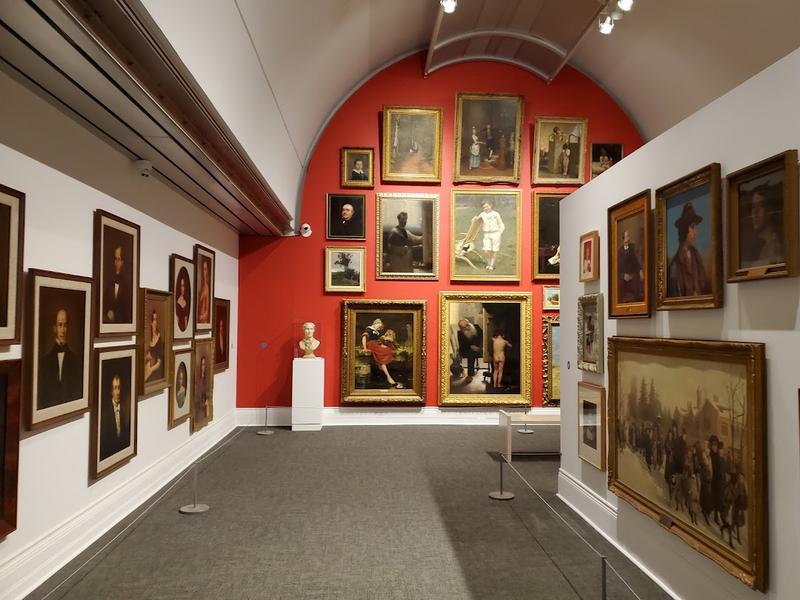
Established in 1940, this museum features exhibits focused on regional art, history & culture.
5894
km
2

Shops, cafes and bars in restored market buildings with street performers in the Piazza.
Day3: Paris
2 attraction(s) ·
4 km
1
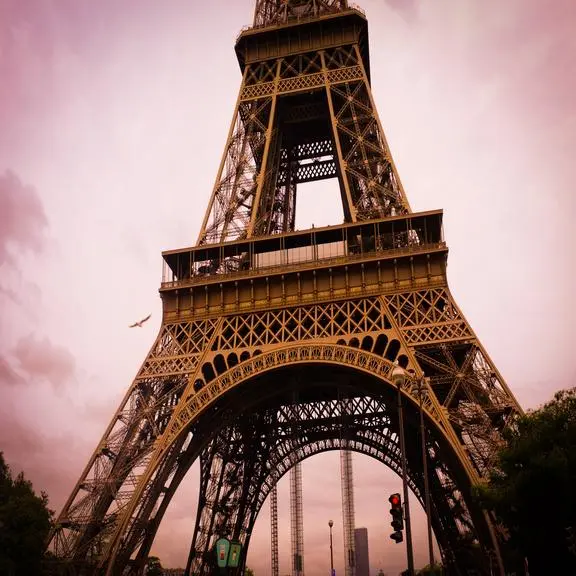
In 1889, the Eiffel Tower was built to commemorate the 100th anniversary of the French Revolution and to welcome the World Expo. This 324-meter-tall giant steel structure was initially controversial as it clashed with the architecture of Paris, and some even called for its demolition. However, today the Eiffel Tower has become a symbol of France and Paris.
Visitors can take the elevator or climb the stairs to reach the top of the tower and enjoy the breathtaking view of the city. On New Year's Eve, the tower sparkles for ten minutes at the top of each hour, and on specific holidays, it displays different colors, such as red for the Chinese New Year and blue for EU Day. During National Day, the Champ de Mars below the tower is an ideal venue for music festivals and New Year celebrations.
There are also two restaurants on the tower: Tour Eiffel 58 and the Michelin-starred restaurant Jules Verne. Tour Eiffel 58 offers lunch and dinner, starting at €19 for lunch and €80 for dinner, but with a higher cover charge. Jules Verne used to be a three-star Michelin restaurant but now has only one star. Lunch starts at €90, and dinner costs around €300 per person. Despite the expensive prices, they are still highly sought after due to their unique location. Therefore, it is advisable to book at least two months in advance during the peak season. If your budget allows, it is recommended to try other three-star Michelin restaurants for a better gastronomic experience.
4
km
2
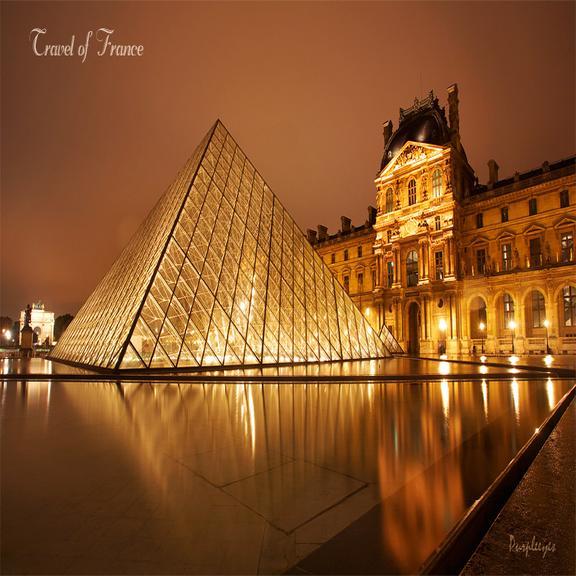
The Louvre Museum is the former residence of French kings, built in the late 12th century. After several expansions and renovations during different periods of reign, it has become one of the largest museums in the world. The Louvre is divided into eight sections, including Oriental Antiquities, Egypt, Greece, Etruria and Ancient Rome, Paintings, Sculptures, Art Objects, Islamic Art, and Medieval to 1848 Paintings.
Originally a medieval fortress defending Paris, the Louvre has played various roles throughout history. With a love for art, French kings sponsored artists and collected a large number of renowned Italian paintings. During the French Revolution, it was opened as a museum and continued to expand and collect more artistic treasures in subsequent historical periods. The Louvre houses around 400,000 artifacts, with approximately 40,000 on regular display. Visitors should prepare in advance and, based on personal interests, it is recommended to visit the Italian and French painting galleries, Ancient Egypt Civilization gallery, Ancient Greek and Roman art gallery, and Napoleon III's apartments. As one of the world's top three museums, the Louvre attracts numerous visitors and has become one of the most popular tourist destinations in the world.
Day4: Paris
3 attraction(s) ·
4 km
1
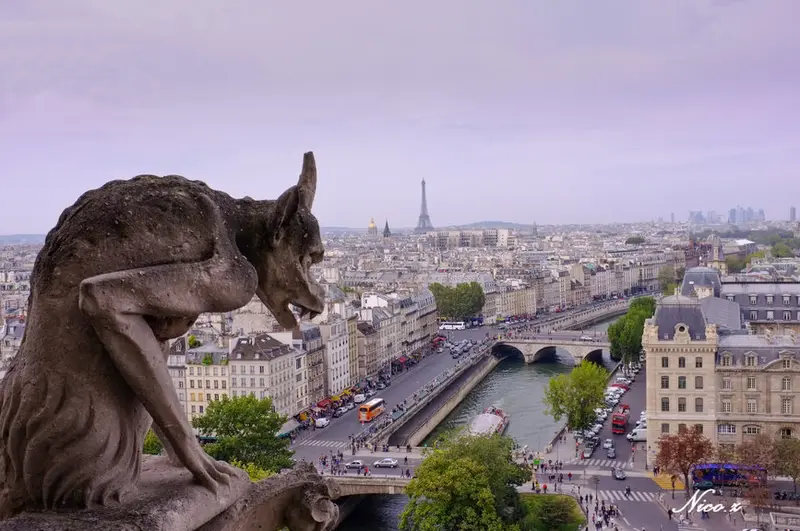
Notre-Dame Cathedral is located on the Île de la Cité in the center of Paris, France. It is a Gothic-style church and the cathedral of the Catholic Archdiocese of Paris. Built between 1163 and 1250, the cathedral has a history of 850 years, witnessing the changes in Paris's history, as well as Napoleon's coronation and the wedding of Napoleon III. The famous novel "The Hunchback of Notre-Dame" by Victor Hugo has also made the cathedral a popular tourist destination. Many people climb to the bell tower to search for the Hunchback, but long queues are common during peak season. In addition, on the first Friday of each month at 3 pm, you can see the exhibition of three relics. Visiting Notre-Dame Cathedral is free, but please respect local religious customs and dress codes, and maintain silence. If you want to visit the bell tower, you can buy tickets on the left side of the church, but be prepared for wait times of over two hours during peak season.
4
km
2
Montmartre is a small village located on a hill about 130 meters high outside the northern city of Paris. It is the geographical high point of Paris and was once a gathering place for impoverished artists. It quickly became the center of drinking and entertainment in Paris due to its location outside the city and its production of wine, giving rise to landmarks such as the Moulin Rouge and the Black Cat. Montmartre attracted many impoverished artists such as Van Gogh, Picasso, Matisse, and Renoir. Today, Montmartre has developed into an upscale residential area with numerous hotels and restaurants. It is also a popular tourist destination due to its portrayal in films like "Amélie". There are various tourist attractions, such as the Basilica of the Sacred Heart and the Place du Tertre. The steps in front of the Basilica offer the best vantage point to admire the entire city of Paris, and there are also cafes and restaurants here. The Place du Tertre is crowded with painters, and you can have your portrait painted by your favorite artist. Couples can also seek out the "I Love You" wall that features the phrase in various languages. Other notable attractions include the Pancake Windmill, the Place du Pigalle, the Cunning Rabbit Bar, the Montmartre Museum, the Montmartre Cemetery, and the Passe-Muraille. In addition, Montmartre exudes a strong artistic atmosphere, with street performers and painters visible everywhere. You can experience the nightlife by visiting the Moulin Rouge and other bars. Whether during the day or at night, Montmartre is worth a visit and is a charming scenic area.
1
km
3
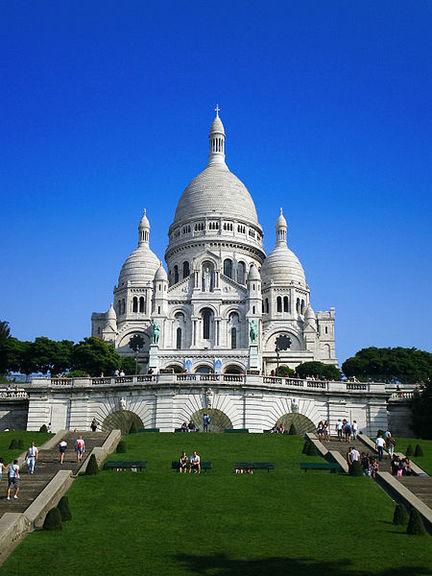
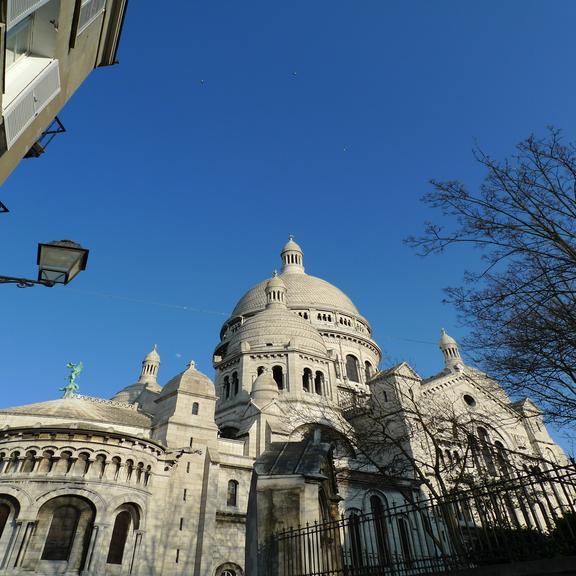
The Sacré-Cœur Basilica, located on the Montmartre hill in Paris, is one of the most iconic Catholic churches in France. It was completed in 1914 but did not officially open until 1919 due to the outbreak of World War I.
The architectural style of the Sacré-Cœur is a blend of Roman and Byzantine influences, with many nationalistic elements. The church features three archways and statues of Saint Joan of Arc and King Louis IX on horseback. The 19-ton Savoyarde bell, cast in 1885, is one of the largest bells in the world. The construction of the Sacré-Cœur was funded entirely by private donations, amounting to approximately 7 million francs, which were exhausted before ground construction even began. A temporary altar was established on March 3, 1876, and it quickly became the main source of funds through pilgrim donations.
The Sacré-Cœur was built using limestone extracted by Châtillon quarries, which continuously releases calcite and ensures that the basilica maintains its white appearance despite weathering and pollution. The church's dome houses one of the largest mosaics in the world, known as the Christ in Majesty. Surrounding the Sacré-Cœur is a garden where people can reflect and meditate, featuring ornamental fountains.
The platform in front of the church provides a partial view of the city center of Paris, and visitors can also climb 300 steps to the top of the bell tower for an unobstructed panoramic view of the city.
Day5: Amsterdam
2 attraction(s) ·
2 km
1
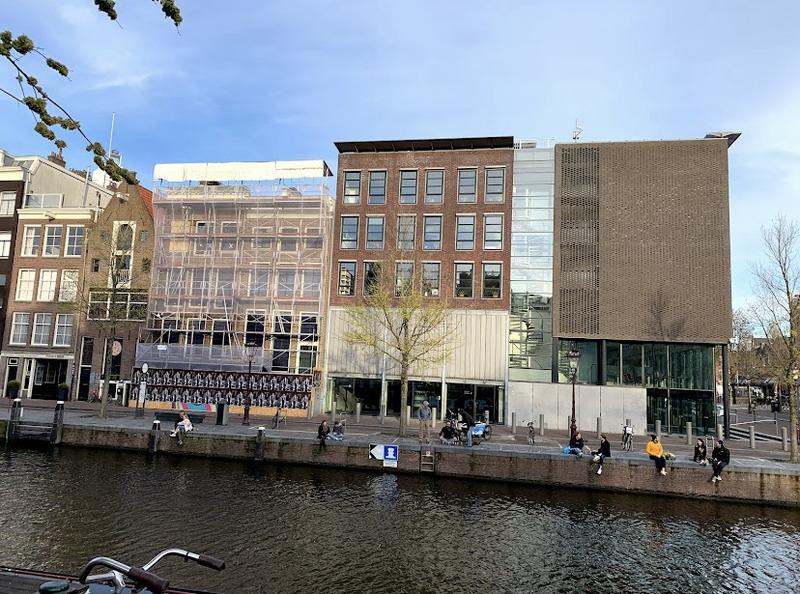
Museum house where Anne Frank & her family hid from the Nazis in a secret annex, during WWII.
2
km
2
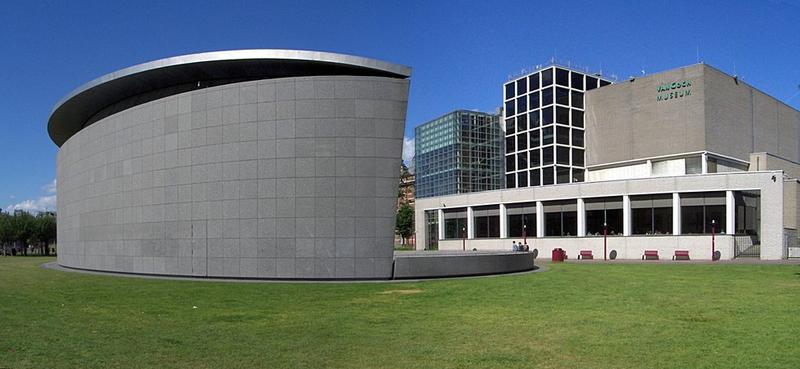
The Van Gogh Museum in Amsterdam has collected a quarter of all of Van Gogh's works, and is a must-visit destination for Van Gogh fans. The exhibition includes works from all periods of his life, from early works like "The Potato Eaters" and "Sunflowers" to later works like "The Yellow House", "Bedroom" and "Wheatfield with Crows", as well as classic works like "Harvest", "Fishing Boats on the Beach at Saintes-Maries" and "Wheatfield under Thunderclouds". These works vividly depict Van Gogh's creative process, allowing visitors to gain a deeper understanding of his artistic world. In addition, the museum also collects valuable treasures such as 750 letters from Van Gogh. It should be noted that some works may not be on display, so it is recommended to confirm and plan your itinerary on the official website before you go. Other works like "Starry Night" are at MoMA in New York, "The Starry Night Over the Rhone" is at the Musée d'Orsay in Paris, and "The Night Café" is at the Van Gogh Museum in the Netherlands. Whether you are a Van Gogh enthusiast or simply interested in art, the Van Gogh Museum is an excellent choice not to be missed.
Day6: Amsterdam
2 attraction(s) ·
2 km

2
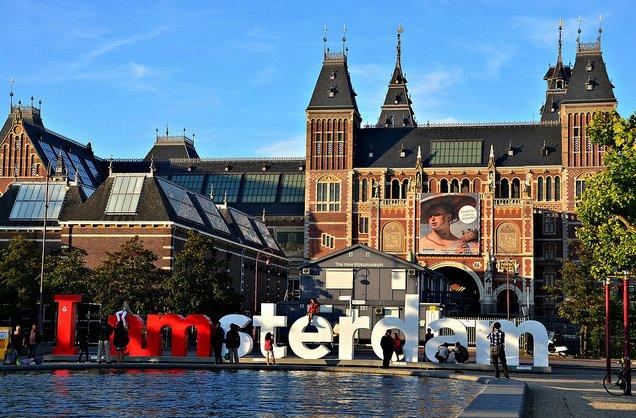
The National Museum in the Netherlands is the country's largest museum and has been highly acclaimed since its opening in 1885. The museum is known for its collection of works from the Dutch Golden Age. It houses numerous masterpieces by Dutch artists, including Rembrandt's "The Night Watch," which is considered the museum's centerpiece, as well as the notable art treasure, "The Jewish Bride." In addition, the museum displays collectibles such as porcelain, glass art, and silverware. Some of the museum's famous exhibits include Rembrandt's "The Night Watch," "The Jewish Bride," "The Sampling Officials of the Drapers' Guild," and "Self-Portrait"; Vermeer's "The Milkmaid" and "The Little Street"; Hals' "Marriage Portrait" and "The Merry Drinker"; Steen's "The Feast of St. Nicholas"; Avercamp's "Winter Landscape"; and the Ott mansion dollhouse.
Day7: Berlin
2 attraction(s) ·
3 km
1
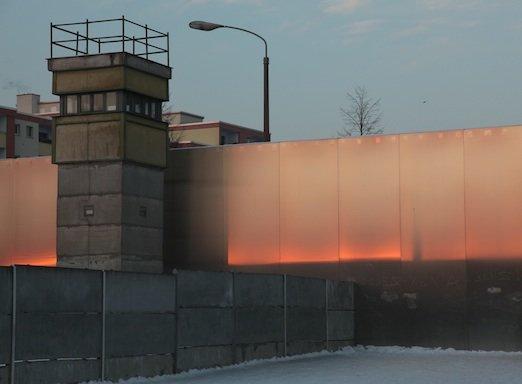
This activity center was established in 1965 and was initially affiliated with the church. However, on August 13, 1961, due to the demolition and prohibition of entry into the church and church hall located on the border, its operation was hindered.
3
km
2
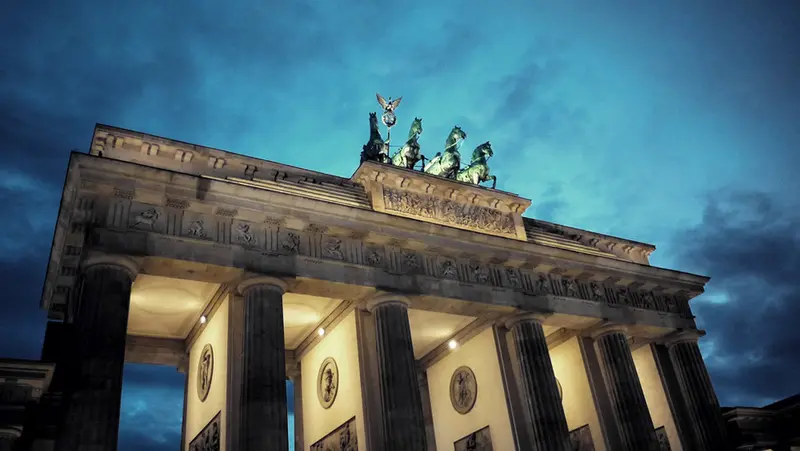
Brandenburg Gate is a landmark in Berlin, symbolizing the unification of Germany. It was built in 1791 in the Neoclassical style, modeled after the city gate of the Acropolis in Athens. The top of the gate features a bronze statue of the Victory Goddess with outstretched wings, holding a scepter adorned with an oak wreath, Iron Cross medal, and a soaring eagle, symbolizing victory in war. Facing east, Brandenburg Gate is the entrance to and the only preserved city gate of the old core area of Berlin. It has witnessed the rise and fall of German history. The Berlin Wall once stood to its west, dividing East and West Germany and preventing people from passing through for decades. Now, after recent restoration following the end of the Cold War, Brandenburg Gate and the surrounding Pariser Platz have become a popular tourist attraction in Berlin. On Pariser Platz, you will also find newly completed buildings such as the US Embassy and the famous Adlon Hotel.
Day8: Berlin
3 attraction(s) ·
3 km
1
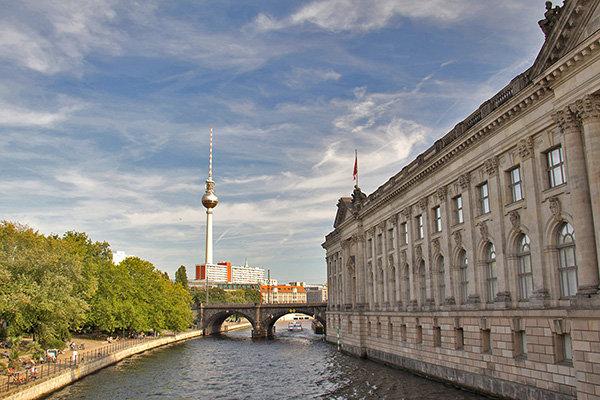
Berlin Museum Island is a small island that houses five museums. Construction began in 1824 and was completed in 1930, with each museum completing its construction. Due to its cultural and architectural significance, the island was declared a UNESCO World Heritage Site in 1999. The famous Pergamon Museum is known for its collection of monumental buildings from various eras. The museum island represents the essence of German museums, with the Pergamon Museum showcasing the history of ancient Egypt and the National Gallery exhibiting works by numerous world-renowned artists. Located in former East Berlin, the museums on the island suffered from neglect and disrepair during economic difficulties. However, after German reunification, significant funding was invested in extensive restoration, restoring the island to its former glory.
1
km
2
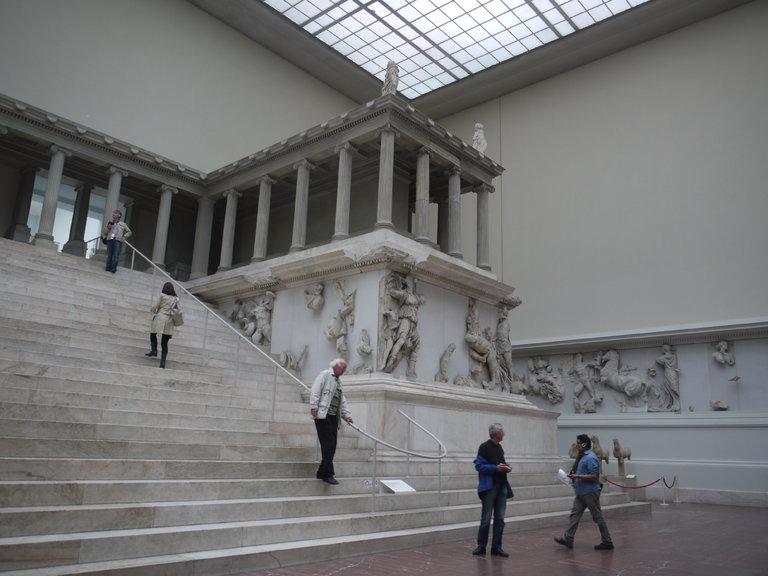
Peñamoa Museum houses many precious artifacts, with the most prominent being the altar from Peñamoa. This altar was made in the 2nd century BC and occupies a whole exhibition hall in the museum, being hailed as its treasure. Additionally, the museum also features a beautiful and vividly sculpted Ishtar Gate from ancient Babylon, which leaves visitors in awe. Furthermore, numerous valuable artifacts from ancient civilizations and Islamic artworks are also on display.
2
km
3
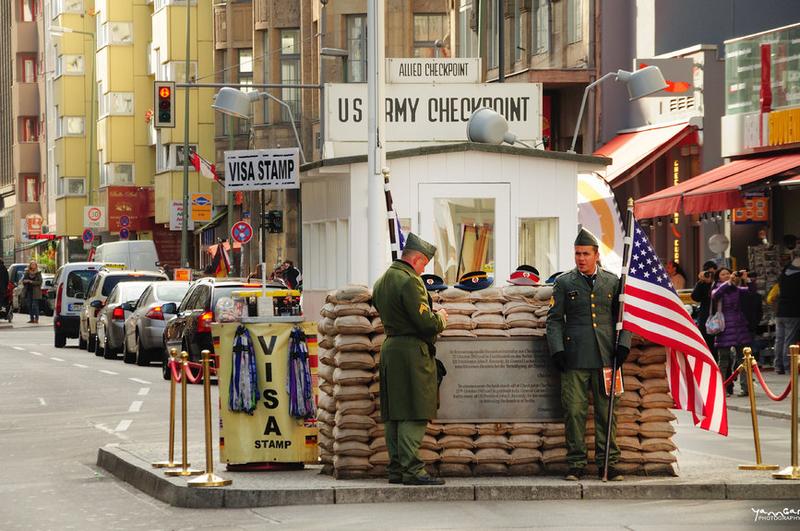
Checkpoint Charlie is a must-see landmark in East Berlin, which used to be one of the eight checkpoints for entering and exiting the city. The checkpoint has been reconstructed and preserved, serving as an important reminder with US military personnel and signs in four languages. Today, Checkpoint Charlie has become a significant tourist attraction, attracting many visitors to revisit the history of over twenty years ago. If you want to delve deeper into the history of the checkpoint, the Berlin Wall, and the period of Germany's division, you can explore the museums near Checkpoint Charlie. These museums showcase the stories of East Berlin residents who risked their lives to escape to West Berlin, demonstrating their courage and intelligence. However, the museum's content selection and arrangement may lack impact. Not far from the Bundestag, at the intersection of Scheidemannstraße and Ebertstraße, there are 191 crosses commemorating escapees, with their names and years of birth and death inscribed on them. The last of these escapees was shot nine months before the fall of the Berlin Wall. In summary, Checkpoint Charlie and its surrounding attractions are excellent places to learn about the history of the Berlin Wall.
Day9: Prague
2 attraction(s) ·
1 km
1
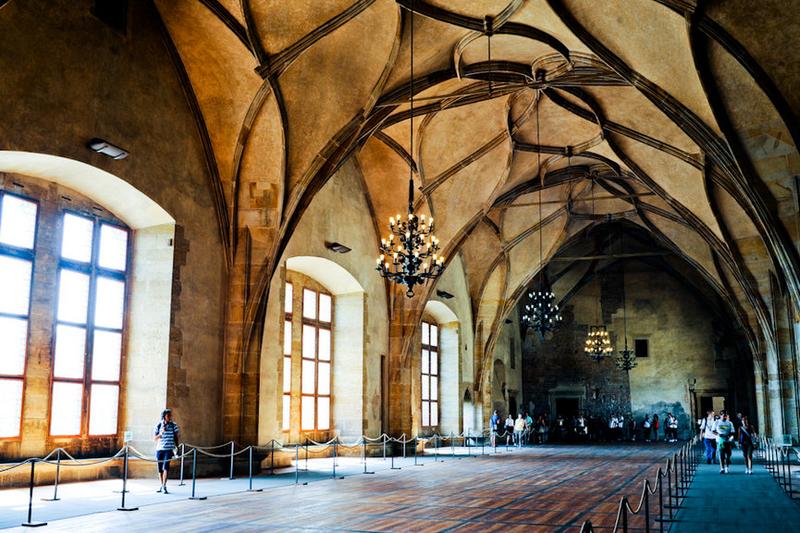
Prague Castle was once the residence of the Czech royal family and is now the office location for the president and national government agencies. It is also a popular spot for viewing the beauty of the Old Town area. The castle houses the crown jewels of Bohemian Kingdom and is one of the largest ancient castles in the world, spanning 570 meters in length and around 130 meters in width. The three most important sights in the castle include St. Vitus Cathedral, Golden Lane, and the Old Royal Palace. St. Vitus Cathedral is the oldest building in the city, with a history of over 1000 years. The highlights of this magnificent grey-black Gothic building include 20th-century stained glass windows, the tomb of St. John, and the St. Wenceslas Chapel. The large stained glass windows were created by the famous painter Mucha. Golden Lane is a small and delicate road with romantic colored small houses on either side. It used to be the residence of servants and craftsmen and got its name from the many alchemists who worked for the kings. In the late 19th century, it became a slum, but after a change in planning in the mid-20th century, the houses were converted into various souvenir and handicraft shops. The famous writer Kafka's old home is also located here. Every day at noon, the Old Royal Palace holds an impressive changing of the guard ceremony, attracting many tourists.
1
km
2
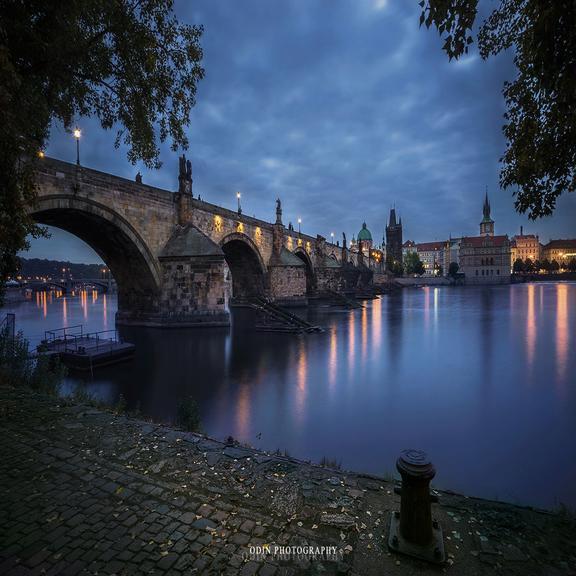
The Charles Bridge, situated in the city center of Prague, Czech Republic, was constructed in the 14th century over the Vltava River. This 520-meter-long and 10-meter-wide stone bridge is a highly valuable and historically significant piece of architecture. Located next to the Prague Castle complex and the Old Town, it was the mandatory route for coronation processions of the monarchs in the past.
As you stroll across the bridge, you can witness street performances by artists and a variety of handicrafts. There are also plenty of artworks to be found, such as watercolor paintings depicting the Charles Bridge and puppets dressed in traditional Czech and court attire.
With a total of 30 statues of saints, this is the oldest and longest bridge in Europe, and has become renowned as an open-air baroque statue museum of Europe, thanks to the masterpieces of Czech baroque artists from the 17th and 18th centuries. While many of the statues have been replaced with replicas, there are still plenty of artworks and cultural heritage to appreciate for the visitors. Notably, the eighth statue on the right-hand side of the bridge is the guardian of the Charles Bridge, St. John. In the middle of the fence lies a golden cross indicating the spot where he was thrown off the bridge.
Day10: Prague
2 attraction(s) ·
1 km
1

Oldest square in the historic center with 10th-century origins, site of many Gothic buildings.
1
km
2
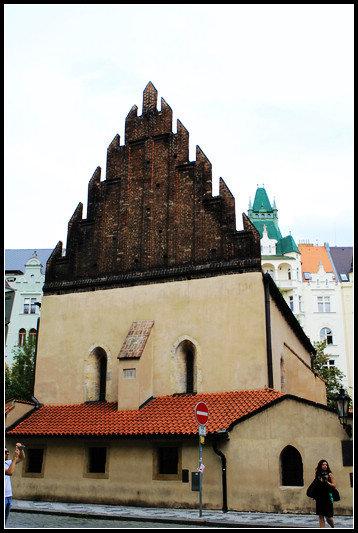
The Jewish Quarter of Prague is located in the Old Town district and was where the Jewish people were segregated and expelled to in the 13th century. It contains historically significant buildings and sites such as the oldest Jewish synagogue in Europe, the Old New Synagogue built in 1270, as well as the Maisel Synagogue, the Spanish Synagogue, the Pinkas Synagogue, the Old Jewish Cemetery, and the Jewish Museum made up of the Klaus Synagogue. Famous author Franz Kafka's residence and birthplace are also in this area. The Old Jewish Cemetery holds thousands of Renaissance and Baroque-style tombstones, which is a notable feature of the district.
Day11: Vienna
2 attraction(s) ·
6 km
2
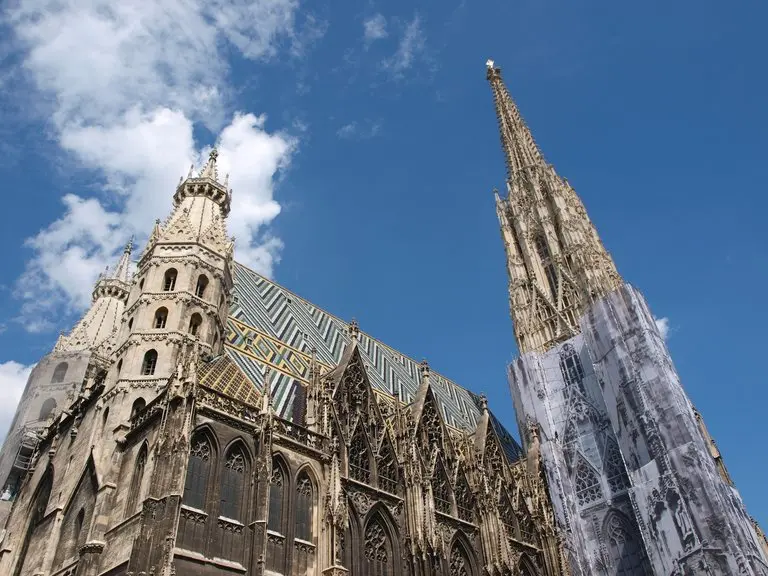
St. Stephen's Cathedral in Vienna is an iconic building and a symbol of Vienna, Austria. The cathedral was built in the 12th century, with the original parts being the main entrance and the side walls in Romanesque style. The Habsburg dynasty expanded and added towers to the cathedral. The South Tower, measuring 136.7 meters, is a Gothic masterpiece and the third tallest church tower in the world. The North Tower, added later, showcases Renaissance style. In the 18th century, the cathedral underwent further expansion and renovations in Baroque style. During World War II, the cathedral was severely damaged by fire and was fully restored and reopened in 1948. The towering South Tower, affectionately known as "Steffl," is a prime example of Gothic architecture. The cathedral's massive bell, known as "Pummerin," has its chimes broadcasted on Austrian radio and television during New Year's. The roof of the cathedral features exquisite reflective patterns and the double-headed eagle symbol of the Habsburg dynasty.
Day12: Vienna
2 attraction(s) ·
2 km

2
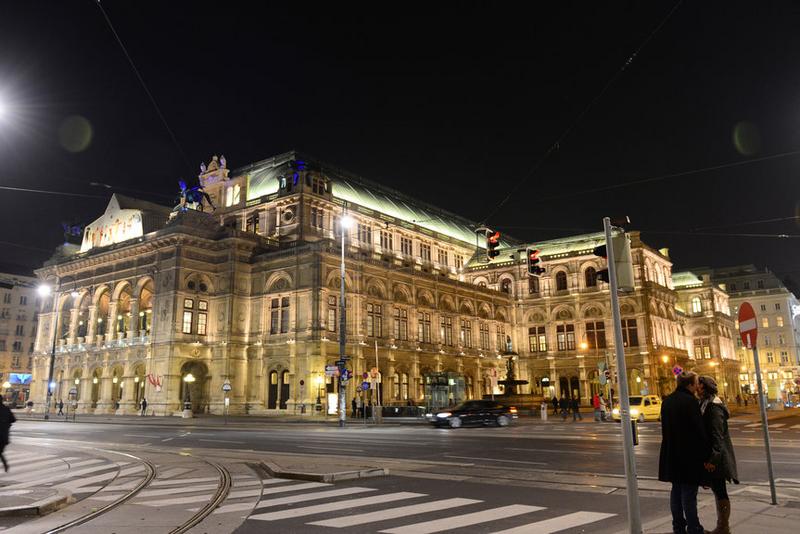
Vienna State Opera, located on the Ringstrasse in the heart of Vienna, is one of the world's most renowned opera houses and a major symbol of Vienna. Built in 1869, its inaugural performance was Mozart's "Don Giovanni," and it quickly became the center of the opera world, earning the nickname "the world's opera capital."
The State Opera is a grand neoclassical building constructed with yellow marble. It features five arches on the main entrance, each representing heroism, drama, imagination, art, and love, with bronze statues of the five opera goddesses.
Spanning 9,000 square meters, the opera house has 6 tiers of seating. The walls of the foyers and corridors are adorned with magnificent oil paintings depicting scenes from the most famous works of celebrated composers, including Mozart's "The Marriage of Figaro," "The Magic Flute," and "Don Giovanni," Beethoven's "Fidelio," Rossini's "The Barber of Seville," and more.
During World War II, the stage of the Vienna State Opera was destroyed by Allied bombing, and in 1945, the entire building was consumed by fire. The opera house we see today is a reconstruction, completed in 1955 with over 2,200 seats, and it premiered with Beethoven's "Fidelio" conducted by Karl Böhm on November 5th.
Day13: Venice
2 attraction(s) ·
1 km
1
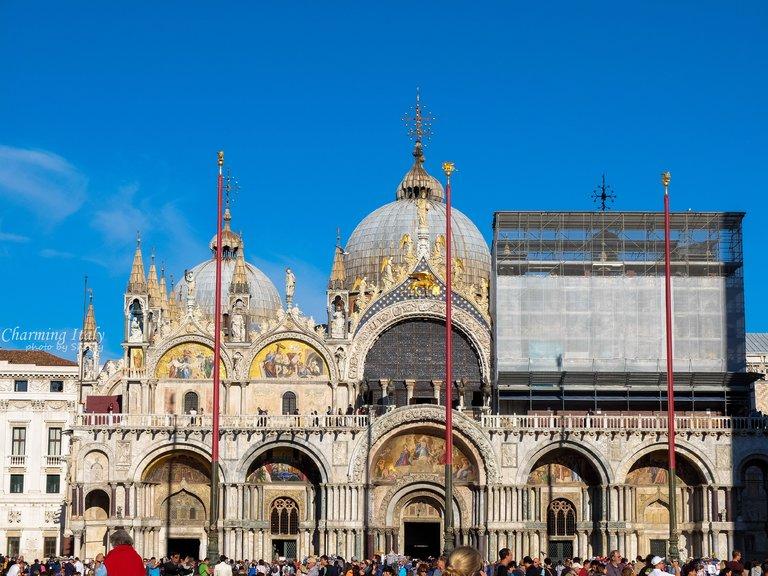
St. Mark's Basilica, located in Venice, Italy, is a famous Catholic cathedral and a papal basilica. It is renowned as one of the world's most famous churches and is known for its Byzantine architectural style. The cathedral serves as the final resting place of St. Mark, the patron saint of Venice, and was once the largest church in medieval Europe. It is also considered a classic example of Venetian architectural art and houses a rich collection of artworks. The church is famous for its Greek cross exterior design and five domes, following the Byzantine style. After multiple renovations, it has become a masterpiece that combines Byzantine, Gothic, Islamic, and Renaissance art. The most famous feature of the cathedral is its mosaic-covered facade, decorated with gold. The interior is also renowned for its golden altar and mosaic decorations. When the sunlight shines on it, the cathedral glows with a golden brilliance, earning it the nickname "Golden Cathedral."
1
km
2
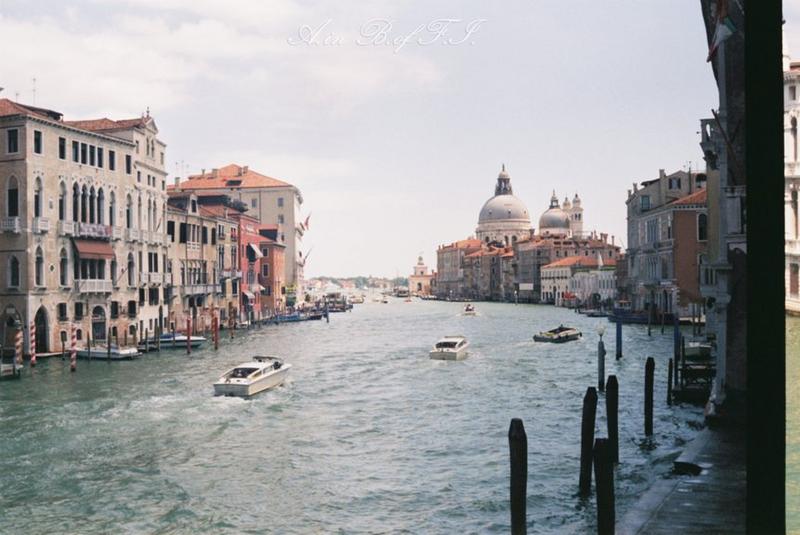
The Grand Canal in Venice is a must-visit attraction and an iconic building in the city. Tourist boats sail through the canal, and the black gondolas, rowed by uniformed gondoliers, are popular among visitors. However, the condition of the buildings on both sides of the canal is poor, and the water is somewhat murky, which to some extent affects the tourist experience.
Day14: Mestre > Venice
3 attraction(s) ·
9 km
1

Ornate Gothic palace buildings hosting exhibitions with duke's rooms, prison & armoury tours.
3
km
2

Known for its unique glass art, this island features studios, demonstrations & souvenirs for sale.
6
km
3
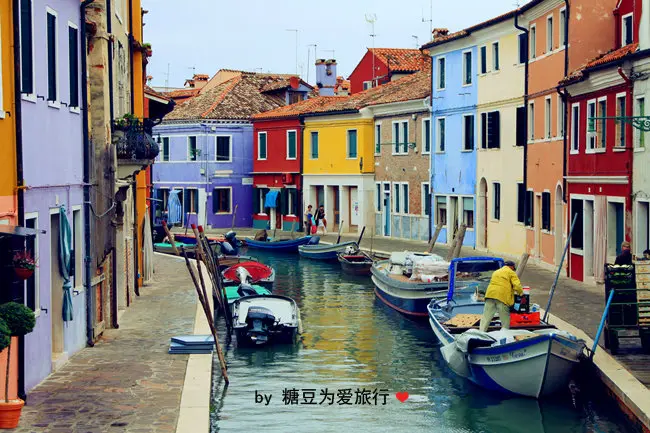
Color Island, also known as Burano Island, is located 7 kilometers from Venice. It is known for its lace textiles and colorful houses, and has been recognized by international magazines as one of the most colorful places in the world. Many artists, such as Baldassarre Galuppi and Remigio Barbaro, have been inspired on this island. Visitors can appreciate the reflection of the colorful houses in the surrounding canals – a paradise of colors. It is recommended to visit the island in the evening to enjoy the beautiful sunset casting a warm glow over the colorful houses.