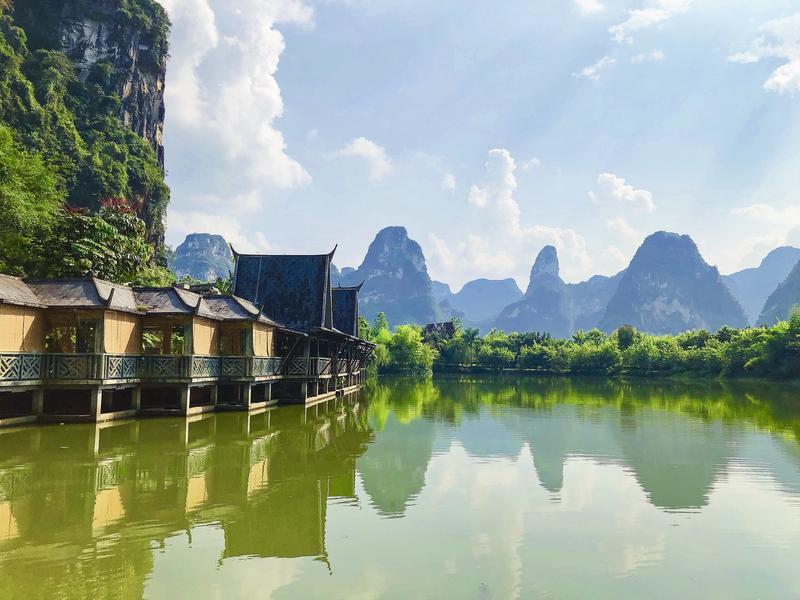
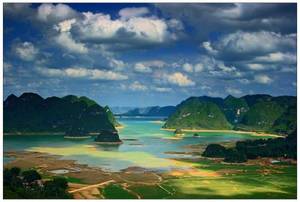
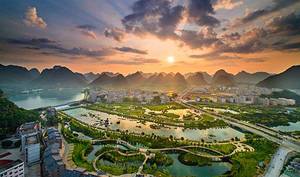
Mingshi Countryside is located in Daxin County, Chongzuo, Guangxi. It features a typical karst pastoral landscape and is known as the “Mini Guilin.” Within the scenic area, lush rice paddies intertwine with bizarre peaks and rocks, with the mountains reflected in the crisscrossing canals and rivers. Villages, waterwheels, and bamboo rafts are scattered throughout, creating a highly idyllic, poetic scene. In late spring and early summer, the rice fields are verdant and the area is shrouded in mist, making it the golden season for shooting pastoral scenery and early morning fog, and ideal for cycling, strolling, and photography.
Detian Transnational Waterfall is located on the China–Vietnam border in Daxin County, Chongzuo, Guangxi, and is one of the largest transnational waterfalls in Asia, connected to Ban Gioc Waterfall in Vietnam. The waterfall cascades down multiple tiers, with the main fall being very wide and a maximum drop of several dozen meters. During the high-water season, the three-tiered falls roar with surging torrents and swirling mist, creating a magnificent spectacle. In spring, the water volume gradually increases and visibility is clear, making it suitable for enjoying the interplay of flowing water and lush greenery. From September to October, the area enters the peak water season, which is the best time to capture panoramic views of the spectacular waterfall and long-exposure shots; visitors can take a bamboo raft to experience the thunderous sound of the water up close.
The Yuhuashi Scenic Area is located around Chongzuo City, Guangxi, and is a natural scenic area famous for its colorful pebbles and riverbank landforms. The riverbed and shores here are covered with Yuhuashi (rain-flower stones) of various colors and delicate patterns. Under sunlight, the rocks appear especially vivid, displaying red, yellow, green, gray, and other hues that contrast sharply with the surrounding greenery and clear water. On sunny days, the changing light and shadow make it especially suitable for close-up photography, macro work, and leisurely walks and sightseeing.
The Zuojiang Scenic Area is located in Chongzuo City, Guangxi, and is renowned for the winding Zuo River and its karst canyon landscapes on both banks. It is an important part of the World Cultural Heritage site “Zuojiang Huashan Rock Art Cultural Landscape.” The river is clear, and the steep, peculiar peaks on both banks create a unique scene characterized by “strange rocks, perilous gorges, and clear waters.” In autumn, the mountainsides are covered in layers of colorful foliage. Drifting downstream by boat, visitors can admire gorges, red cliffs, and caves, and experience the strange rocks and precipitous landscapes described by the explorer Xu Xiake. It is a classic route that combines natural sightseeing with cultural exploration.
The Huashan Rock Art is located on the cliffs along the Zuo River in Ningming County, Chongzuo, Guangxi, and forms the core area of the famous Zuojiang Huashan Rock Art Cultural Landscape, which has been inscribed on the World Cultural Heritage list. The rock paintings, mostly rendered in ochre-red pigment on towering, steep cliff faces, feature images of human figures, deities, drum shapes, boats, and more, and are believed to be totem symbols of the ancient Luoyue people’s rituals and social life. Tens of thousands of images spread across cliff walls tens of meters high create an awe-inspiring sight. In autumn, when the sun is lower in the sky, the color contrast of the rock art is stronger and the outlines are clearer, making it more suitable for viewing and archaeological-cultural interpretation. Visitors can take a boat and look up from the river, experiencing a highly impressive gallery of prehistoric art.