Discover Australia in 6 Days
6 cities |
20 attraction(s) |
total distance 1283
km
 TIPS
TIPS
Day1
Day2
Day3
Day4
Day5
Day6
Day1: Sydney
3 attraction(s) ·
2 km
1
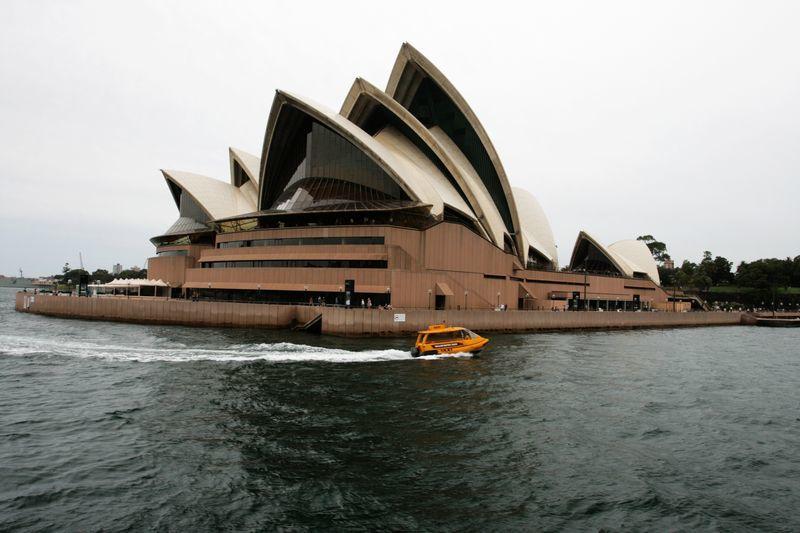
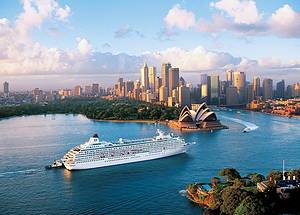
The Sydney Opera House, a famous building in Australia, is located at the convenient Lang Jiao in the magnificent Sydney Harbor. Its white sculptural body is uniquely shaped, like a scattered shell, and is intertwined with the Sydney Harbour Bridge, celebrating together. Construction began in 1959 and lasted for 14 years before being completed in 1973 as a landmark building in Sydney. On June 28, 2007, the Sydney Opera House was named a world cultural heritage site by the United Nations Educational, Scientific and Cultural Organization. Every year, thousands of tourists come to visit this building and experience its unique charm.
The Sydney Opera House consists of two large main halls, a small theater, a concert hall, and other ancillary facilities. The two halls are located within a unique competition sail-shaped structure, while the small theater is located within the lower base. The concert hall can accommodate up to 2,679 spectators and has the world's largest mechanical timber-linked organ, consisting of 10,500 wind pipes. The smaller of the two main halls is actually the opera house. Because the larger hall was originally built as an opera house, the stage of the smaller hall is relatively small, making it difficult to accommodate large orchestral performances. Therefore, the completed opera house stage was demolished and rebuilt.
Every day, the Sydney Opera House provides guided tours in Mandarin Chinese for 30 minutes, leading tourists to experience the wonders of this building. From any angle, the Sydney Opera House's design is breathtaking, like an art temple that stands out on its own.
1
km
2

Iconic structure opened in 1932, offering a BridgeClimb & the Pylon Lookout, hosting exhibitions.
1
km
3
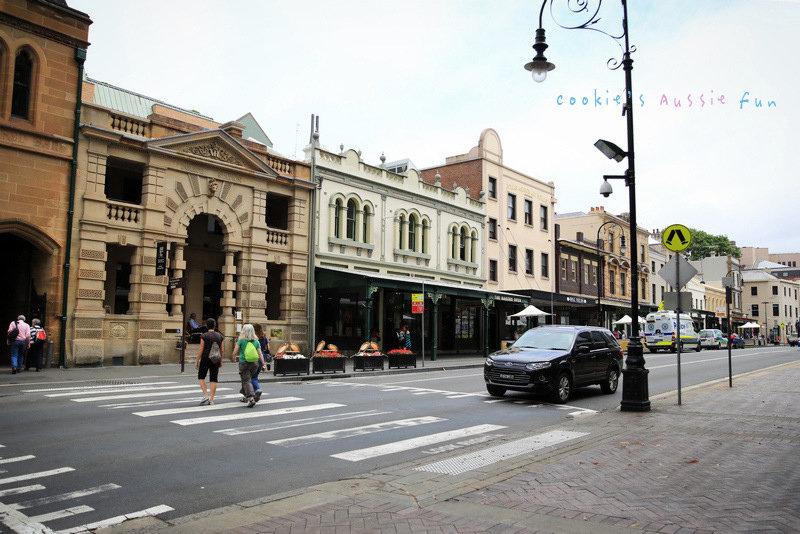
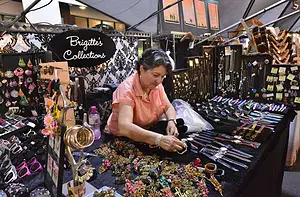
The Rocks is one of the most vibrant areas in Sydney. Its name comes from the early days of the colony, when most buildings were made of local sandstone. This historic area was once a gathering place for sailors, merchants, criminals, and prostitutes, and was also the site of the outbreak of the bubonic plague in 1900 that claimed the lives of 100 people. In the 1920s, many streets were destroyed to build the southern transportation channel Sydney Harbour Bridge. It was not until the community reconstruction of the 1970s that this area became a popular tourist destination. The Rocks has many attractions worth visiting, such as Nurses Walk and Suez Canal, ancient warehouses such as Chui Bell Bay, and Esjen Park under Sydney Harbor Bridge. George Street, the main street of The Rocks, is Australia's first street, with many historic streets, artistic cafes, craft shops, restaurants, and art galleries. There are also markets to visit on weekends, but prices are not very cheap. It should be noted that some vendors do not allow photography, so photography enthusiasts should pay attention.
Day2: Sydney
3 attraction(s) ·
15 km
1
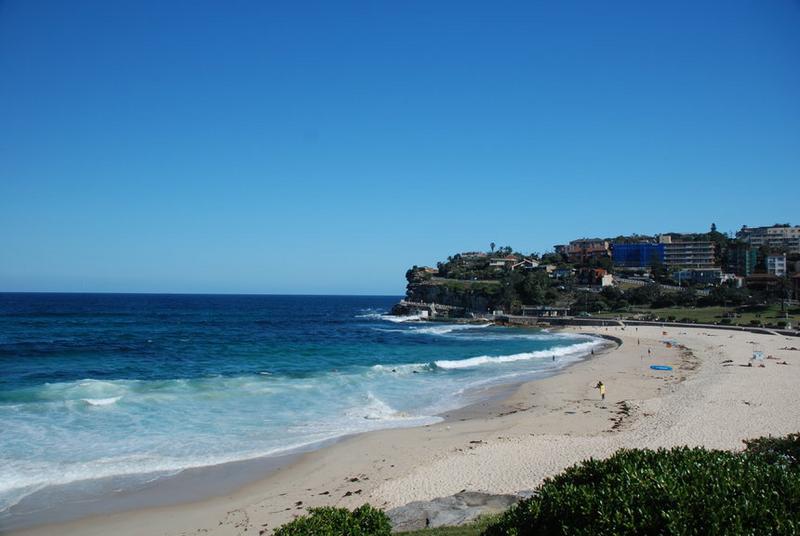
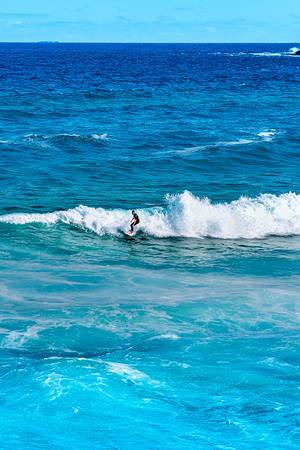
According to legend, this crescent-shaped beach is named after legendary surfer Bondi. Bondi Beach is located on the eastern coast of Sydney, 15 kilometers from the city center. The 1.5-kilometer-long beach faces the Pacific Ocean, with strong winds and high waves, and is one of the two major surfing resorts in New South Wales. Along the coast, there are a variety of diverse restaurants, cafes, surf shops, and souvenir stores.
8
km
2

Darling Harbour is located in Sydney, New South Wales, Australia. It is a large area dedicated to free activities and pedestrian-only zones, situated in the central western part of the Sydney Central Business District.
8
km
3
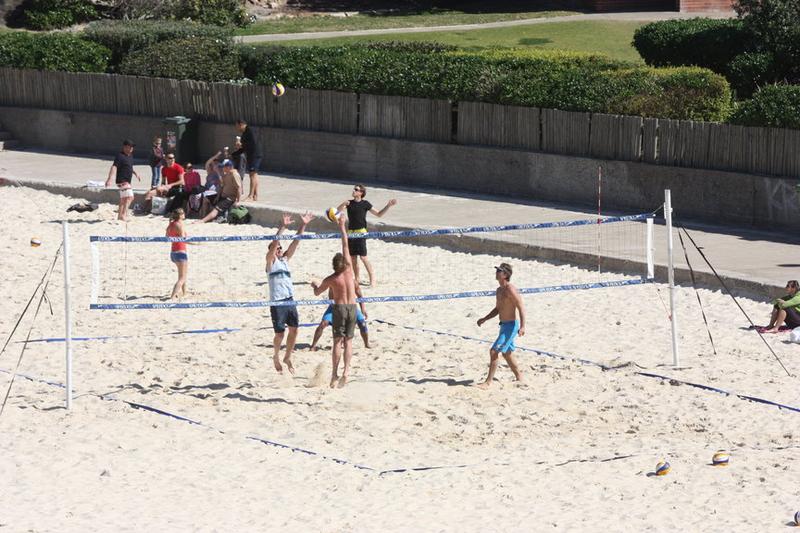
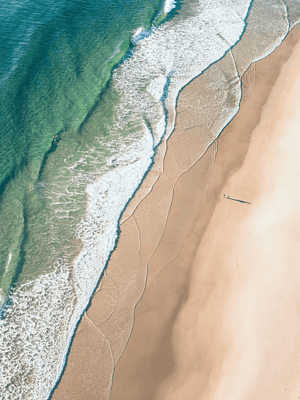
This place has pristine white sandy beaches and enchanting sea views, making it one of the top choices for local Sydneysiders to unwind and vacation. Additionally, the beautiful beaches also attract many tourists to come and enjoy the sea views and beach beauties.
Day3: Blue Mountains Australia > Katoomba > Sydney
3 attraction(s) ·
20 km
1
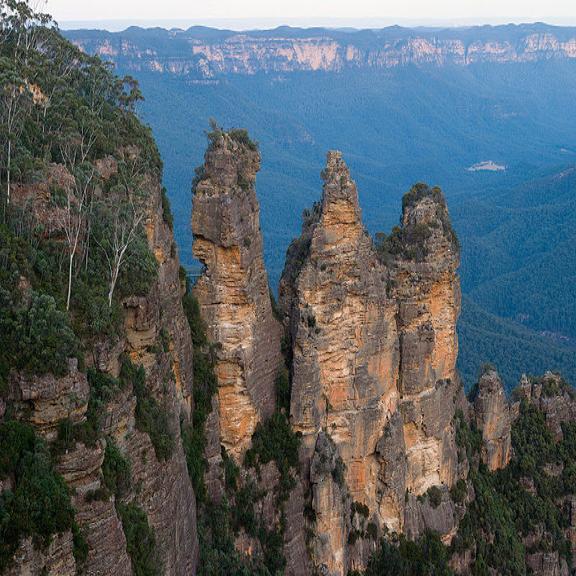
The Blue Mountains National Park is located on a plateau between 100 and 1300 meters above sea level, with vast areas of pristine and subtropical rainforest, with eucalyptus trees being the most famous and the only food for Australia's precious animal, the koala. Walking into this picturesque primitive forest national park, one can inhale the fragrance of eucalyptus trees and feel as though they are returning to an idyllic paradise.
According to studies, around 16,000 years ago, volcanic eruptions led to geological changes that made the area active, and years of erosion caused various bizarre rock formations and peaks. The Blue Mountains National Park has over 400 species of plants and animals, fully demonstrating the trajectory of Australia's natural ecological evolution. What's even more valuable is that humans and nature harmoniously coexist in this primitive forest national park, with 80,000 residents scattered across seven towns, forming a unique landscape.
Located 100 kilometers west of Sydney, the Blue Mountains National Park is one of the world's natural heritage sites, featuring geological formations similar to the Grand Canyon in the United States. The largest is the Blue Mountains National Park, with Yellow Falls, lookout platforms, Echo Point, and other attractions being some representatives of the area. Don't miss the opportunity to see the Katoomba Falls and Scenic World theme park, as well as the chance to observe the Blue Mountains from a high-altitude cable car station.
19
km
2
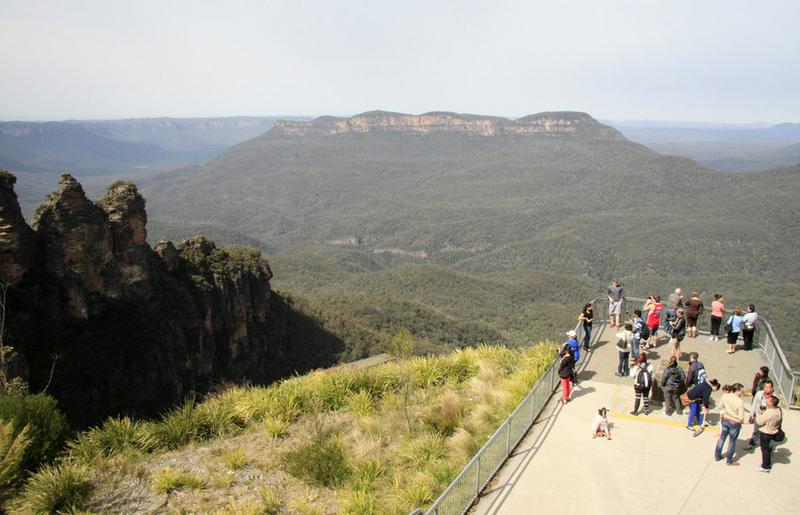
The Three Sisters is a group of unique rocks located in the Blue Mountains Coffee National Park on the outskirts of Sydney. These three yellow-brown cliff heads have a unique shape and present a dynamic and vivid form. Due to the steep terrain, it is impossible to observe them up close and can only be viewed from a distance. They are hailed as a symbol of the Blue Mountains region, and their name originates from an ancient Aboriginal legend in Australia.
2
km
3

Mountainous locale offering cool experiences for sweeping views, such as a cable car ride & railway.
Day4: Melbourne
4 attraction(s) ·
50 km
1
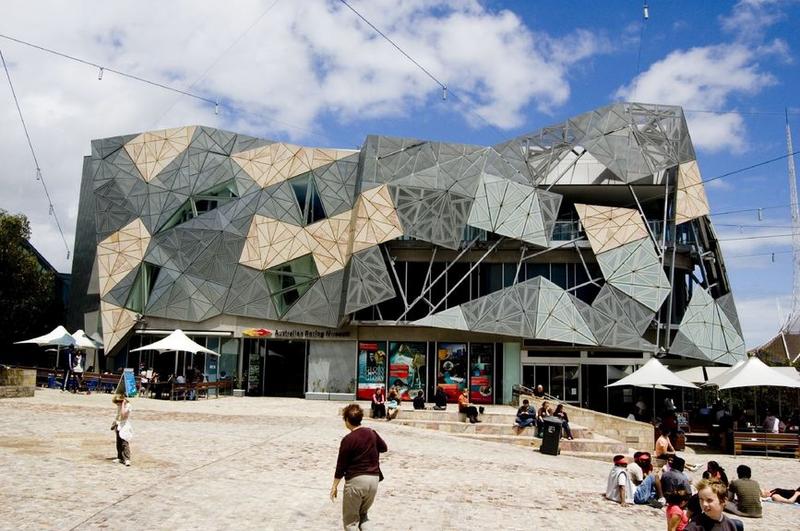
Fed Square is located in the center of Melbourne, Australia. It covers an area of 3.2 hectares and is adjacent to the Yarra River. The unique architectural style exudes the charm of Australian Aboriginal culture. The square is a holy place for people to gather, and the tourist center is a focus. Various celebratory events are held here every year, including New Year's countdowns and live sports broadcasts. The history of the square can be traced back to the 1960s. After a large-scale reconstruction, it was put into use in 2002 as a mixed-use multi-functional place with 16 cafes, bars and restaurants, various shops, and tourist service centers. There are many attractions around the square, such as the Ian Potter Center, the Australian Centre for the Moving Image, the National Gallery of Victoria Children's Play area, and the Australian Commercial Art galleries Association, etc. Tourists can spend unforgettable time here. The Melbourne Visitor Center provides thoughtful services for tourists to understand tourism information in Melbourne and Victoria. Fed Square is a vibrant and culturally rich place that is worth visiting.
1
km
2
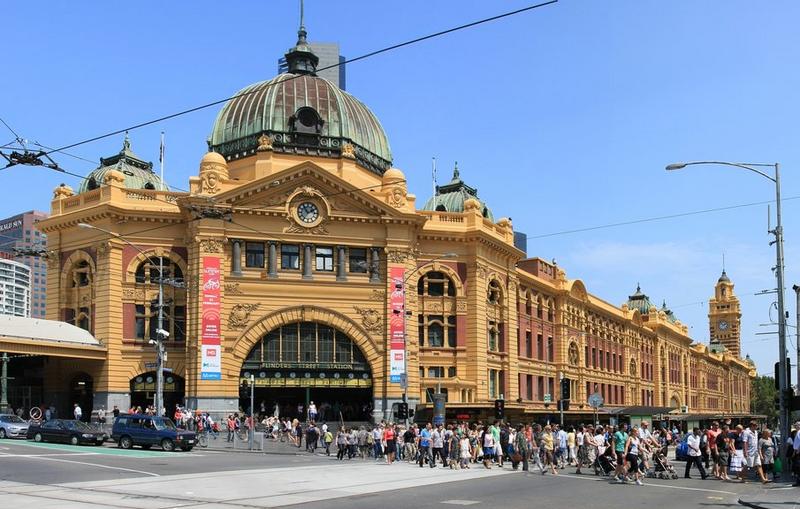
Flinders Street Station is one of Melbourne's largest and busiest train stations, as well as one of the buildings left behind from the Victorian era. As the first railway station in Melbourne, it serves as the central station for local railway lines. Its grand architectural style is very attractive and easily recognizable. Located in the city center, the station's unique location facing Federation Square and St. Paul's Church has become one of Melbourne's most important cultural centers. The entire station is built with yellow stone, and the bronze dome is one of its greatest features. When night falls, the station is illuminated by dim yellow lights and looks especially beautiful. As far as the eye can see, the magnificent buildings give people a peaceful and beautiful feeling. Melbourne residents often meet under the station's clock, which has become an important part of their lives. To experience the charm of Flinders Street Station, it is recommended to visit at night when you will surely be amazed by its unique classical beauty.
1
km
3

Vibrant, landmark district of noteworthy urban art & graffiti with a local small-plates restaurant.
50
km

Day5: Melbourne > Port Campbell > Corangamite
3 attraction(s) ·
18 km
1
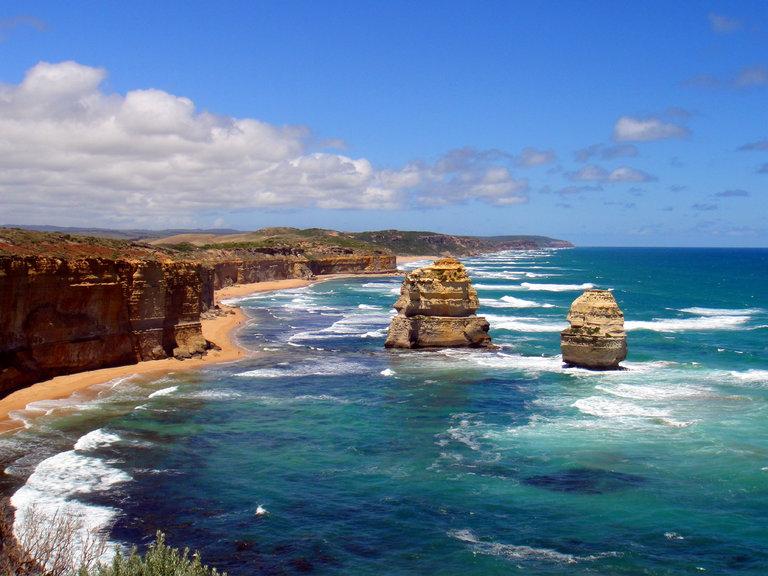
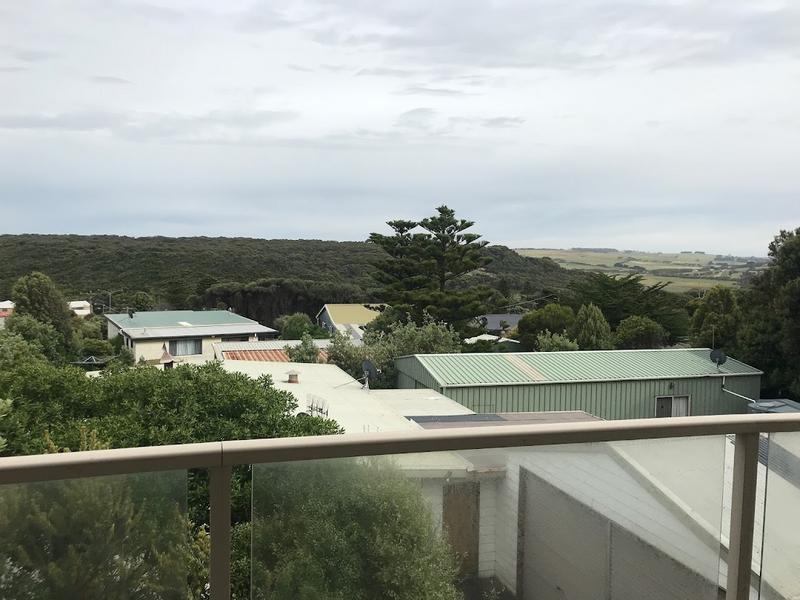
The Great Ocean Road is a travel route that stretches nearly 250 kilometers west of Melbourne, Australia. The route crosses through pristine beaches, picturesque towns, stunning mountains, and rainforests, making it an unforgettable journey filled with beautiful scenery and historic significance. The eastern portion of the Great Ocean Road winds through the Otway Mountains, where lush forests and farmland thrive. Traveling along the coast from Melbourne to the endpoint takes approximately four hours, while taking an inland highway can save you over an hour, but you'll miss out on many breathtaking coastal views. Towns along the way include Geelong, Torquay, Apollo Bay, and Port Campbell. One of the most famous attractions along the route is the Twelve Apostles, but due to the high number of tourists, it's recommended that those driving stay overnight in Port Campbell and head there early in the morning to avoid crowds. You can also continue westward from Port Campbell to explore the town of Warrnambool and its many beautiful, unique sights that are less crowded. Our suggestion is to stay overnight in Warrnambool for a leisurely holiday, where you can find great deals like "a 300 square meter new villa with garage for only 700 yuan" and enjoy the comfort and tranquility.
11
km
3

Day6: Melbourne
4 attraction(s) ·
6 km
1
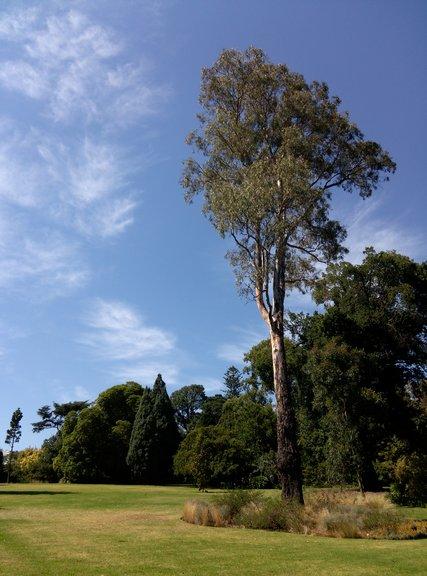
The Melbourne Botanic Garden is a beautiful garden located on the banks of the Yarra River, with over 12,000 species of plants from around the world. Walking along the dirt roads in the park, you can admire a small area of pristine rainforest and play frisbee on the large lawn. There is also a 4-kilometer running track in the park that passes by lakes where you can see beautiful eels and black swans. Undoubtedly, this is one of the most striking gardens in Melbourne.
4
km
2

This market, which began in the mid-19th century, has now become the largest open-air market in Australia and even in the southern hemisphere. Here you can find everything, whether it's seafood, fresh meat, vegetables, fruits, or clothing, shoes, souvenirs, etc. If you can make it in time, you can also take advantage of the discounts on fresh fruits, vegetables, and meat before the market closes, and get them at affordable prices. The food night market on Wednesday nights is not to be missed. The night market in 2014 is from July 9th to August 26th, and every Wednesday night from November 5th to March 25th the following year, from 17:00 to 22:00. The night market not only has delicious food, but also bars, clothing, art and other goods, and there are live band performances, which are definitely worth a visit.
3
km
4