Romantic Trip to Paris
1 cities |
12 attraction(s) |
total distance 20
km
 TIPS
TIPS
Day1
Day2
Day3
Day1: Paris
4 attraction(s) ·
6 km
1
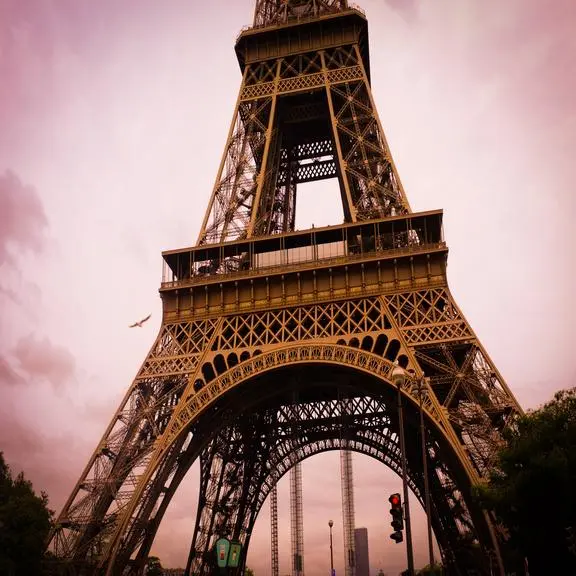
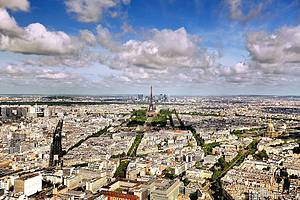
In 1889, the Eiffel Tower was built to commemorate the 100th anniversary of the French Revolution and to welcome the World Expo. This 324-meter-tall giant steel structure was initially controversial as it clashed with the architecture of Paris, and some even called for its demolition. However, today the Eiffel Tower has become a symbol of France and Paris.
Visitors can take the elevator or climb the stairs to reach the top of the tower and enjoy the breathtaking view of the city. On New Year's Eve, the tower sparkles for ten minutes at the top of each hour, and on specific holidays, it displays different colors, such as red for the Chinese New Year and blue for EU Day. During National Day, the Champ de Mars below the tower is an ideal venue for music festivals and New Year celebrations.
There are also two restaurants on the tower: Tour Eiffel 58 and the Michelin-starred restaurant Jules Verne. Tour Eiffel 58 offers lunch and dinner, starting at €19 for lunch and €80 for dinner, but with a higher cover charge. Jules Verne used to be a three-star Michelin restaurant but now has only one star. Lunch starts at €90, and dinner costs around €300 per person. Despite the expensive prices, they are still highly sought after due to their unique location. Therefore, it is advisable to book at least two months in advance during the peak season. If your budget allows, it is recommended to try other three-star Michelin restaurants for a better gastronomic experience.
2
km
2
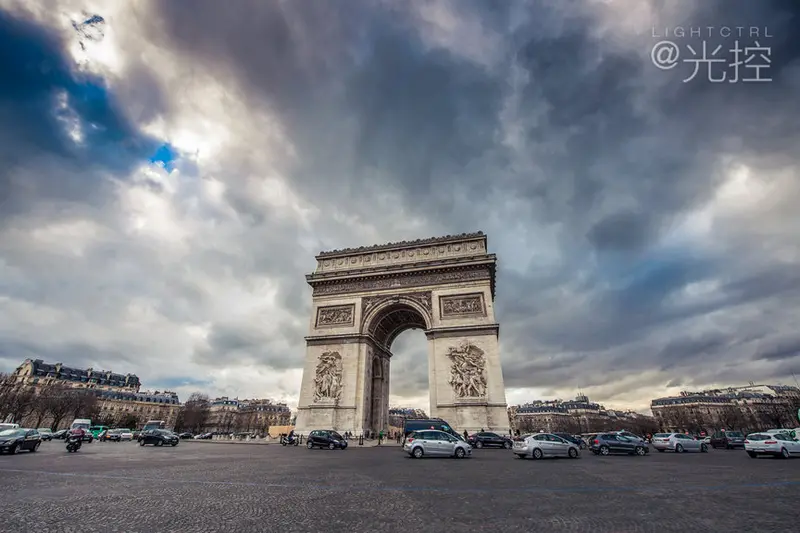
The Arc de Triomphe is located in the center of Place Charles de Gaulle in Paris and is also known as the "Triumphal Arch." The construction of the monument began in 1806 to celebrate a great victory in the Battle of Austerlitz, with Napoleon laying the first stone. Unfortunately, Napoleon did not live to see its completion. Twenty years later, a funeral was held under the Arc de Triomphe to honor him.
Walking from the underground tunnel of the Champs-Élysées to beneath the Arc de Triomphe, visitors can see an unknown soldier's tomb and an eternal flame, which is lit to honor the 1.5 million French soldiers who sacrificed their lives in World War I. On important holidays, a giant French flag is hung at the top of the Arc de Triomphe, accompanied by related commemorative activities. For example, May 8th commemorates Victory in Europe Day from World War II, and November 11th commemorates Armistice Day from World War I.
On July 14th, the national holiday military parade takes place from the Arc de Triomphe to Place de la Concorde. To secure a good spot, visitors need to wake up early and queue in advance. On certain clear mornings, visitors may find some people already waiting quietly beneath the Arc de Triomphe. Additionally, the monument becomes the center of New Year's Eve celebrations, attracting a large crowd, although there are no fireworks in Paris.
The Arc de Triomphe serves as the hub, with twelve major avenues radiating from it. Among them, the most famous one is the Avenue des Champs-Élysées, leading straight from the Louvre to Place de la Concorde. This nearly two-kilometer-long avenue is considered one of the most beautiful streets in the world.
1
km
3
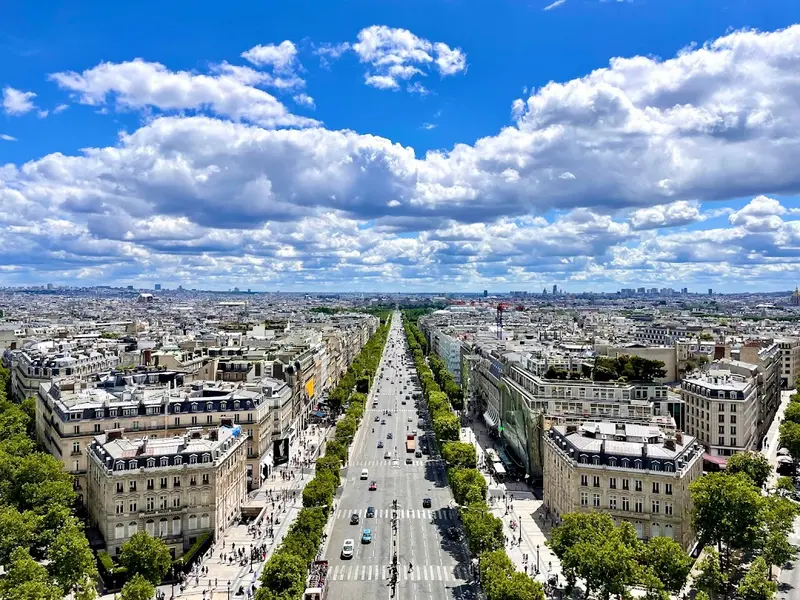
Famed route of landmarks such as the Louvre, Tuileries & Arc de Triomphe plus shops & restaurants.
4
km
4
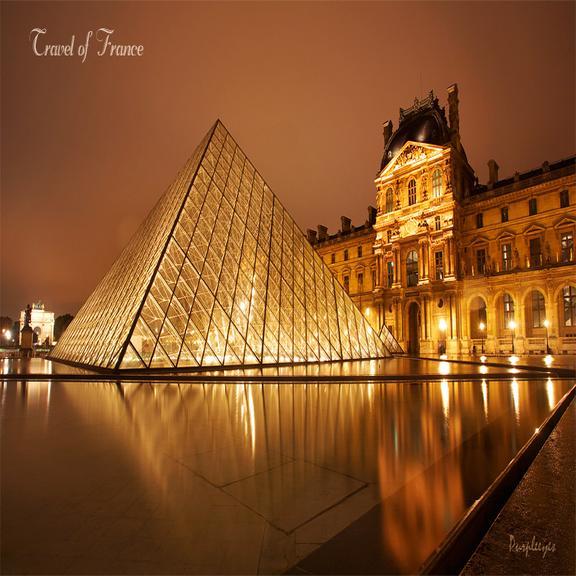
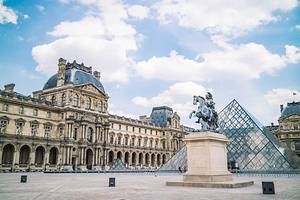
The Louvre Museum is the former residence of French kings, built in the late 12th century. After several expansions and renovations during different periods of reign, it has become one of the largest museums in the world. The Louvre is divided into eight sections, including Oriental Antiquities, Egypt, Greece, Etruria and Ancient Rome, Paintings, Sculptures, Art Objects, Islamic Art, and Medieval to 1848 Paintings.
Originally a medieval fortress defending Paris, the Louvre has played various roles throughout history. With a love for art, French kings sponsored artists and collected a large number of renowned Italian paintings. During the French Revolution, it was opened as a museum and continued to expand and collect more artistic treasures in subsequent historical periods. The Louvre houses around 400,000 artifacts, with approximately 40,000 on regular display. Visitors should prepare in advance and, based on personal interests, it is recommended to visit the Italian and French painting galleries, Ancient Egypt Civilization gallery, Ancient Greek and Roman art gallery, and Napoleon III's apartments. As one of the world's top three museums, the Louvre attracts numerous visitors and has become one of the most popular tourist destinations in the world.
Day2: Paris
3 attraction(s) ·
9 km
1
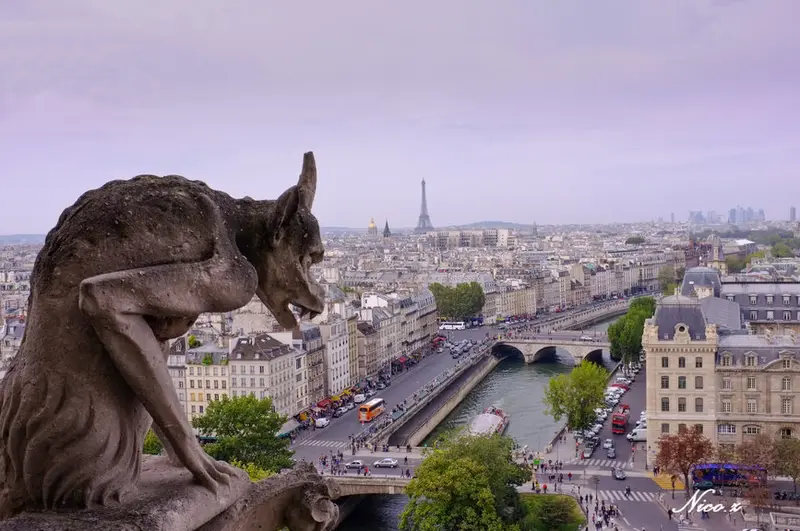
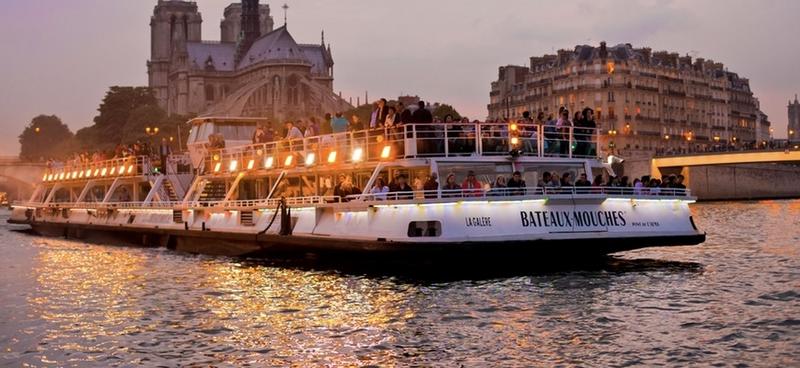
Notre-Dame Cathedral is located on the Île de la Cité in the center of Paris, France. It is a Gothic-style church and the cathedral of the Catholic Archdiocese of Paris. Built between 1163 and 1250, the cathedral has a history of 850 years, witnessing the changes in Paris's history, as well as Napoleon's coronation and the wedding of Napoleon III. The famous novel "The Hunchback of Notre-Dame" by Victor Hugo has also made the cathedral a popular tourist destination. Many people climb to the bell tower to search for the Hunchback, but long queues are common during peak season. In addition, on the first Friday of each month at 3 pm, you can see the exhibition of three relics. Visiting Notre-Dame Cathedral is free, but please respect local religious customs and dress codes, and maintain silence. If you want to visit the bell tower, you can buy tickets on the left side of the church, but be prepared for wait times of over two hours during peak season.
5
km
3
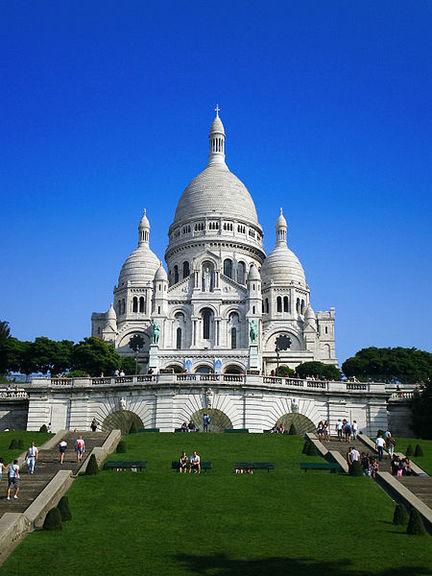
The Sacré-Cœur Basilica, located on the Montmartre hill in Paris, is one of the most iconic Catholic churches in France. It was completed in 1914 but did not officially open until 1919 due to the outbreak of World War I.
The architectural style of the Sacré-Cœur is a blend of Roman and Byzantine influences, with many nationalistic elements. The church features three archways and statues of Saint Joan of Arc and King Louis IX on horseback. The 19-ton Savoyarde bell, cast in 1885, is one of the largest bells in the world. The construction of the Sacré-Cœur was funded entirely by private donations, amounting to approximately 7 million francs, which were exhausted before ground construction even began. A temporary altar was established on March 3, 1876, and it quickly became the main source of funds through pilgrim donations.
The Sacré-Cœur was built using limestone extracted by Châtillon quarries, which continuously releases calcite and ensures that the basilica maintains its white appearance despite weathering and pollution. The church's dome houses one of the largest mosaics in the world, known as the Christ in Majesty. Surrounding the Sacré-Cœur is a garden where people can reflect and meditate, featuring ornamental fountains.
The platform in front of the church provides a partial view of the city center of Paris, and visitors can also climb 300 steps to the top of the bell tower for an unobstructed panoramic view of the city.
Day3: Paris
5 attraction(s) ·
3 km
1
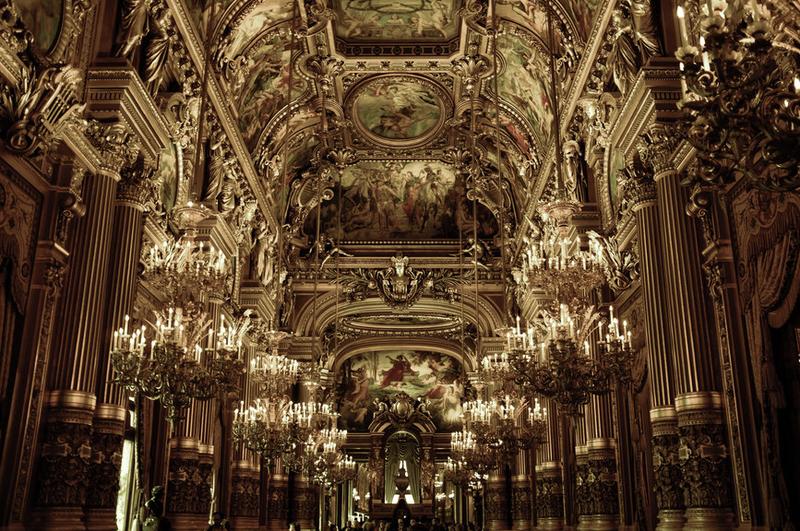
The Garnier Opera House is located at the intersection of Paris and was redesigned by Napoleon III and Haussmann, and eventually adopted the design proposal of the young architect Garnier. When Queen Eugenie saw this design, she was surprised to find that it did not resemble Romanesque, Classical, Louis XIV, or Louis XV styles. It turned out to be designed by her husband! The opera house symbolizes the love between Napoleon III and Eugenie, and the letters N and E at the top represent this. The opera house used to be a popular place for upper-class society to date. Wealthy young people would meet at the statue of the nude goddess in front of the opera house and then go to nearby rue de la Paix and Place Vendôme to buy engagement rings. This custom has evolved into the tradition of "giving diamond engagement rings". Nowadays, most performances have been relocated to the Bastille Opera House. The Garnier Opera House is open to visitors during the day and offers ballet and opera performances. Next to the opera house is Rue de la Banque, where there are now many restaurants with good quality and low prices. Behind it are the Galeries Lafayette and Printemps, making it the busiest place in Paris.
1
km
2
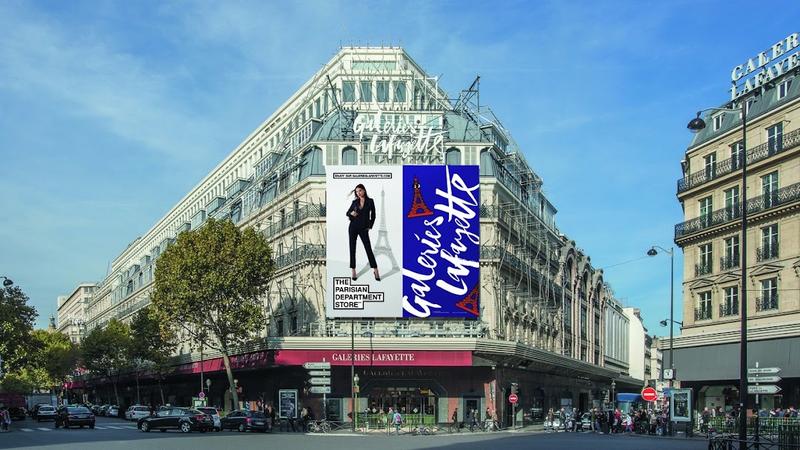
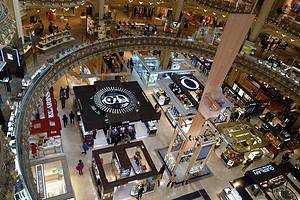
Grand, century-old department store with a steel-frame art nouveau glass dome ringed by loggias.
1
km
3

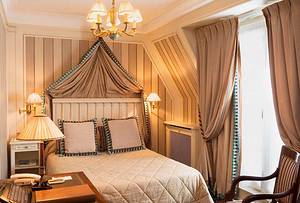
Lavish lodging with opera house views & a renowned restaurant, plus a spa & a fitness room.
1
km
4

Renowned luxury hotel with posh quarters & upscale dining, plus a chic spa & a gym.
3
km
5
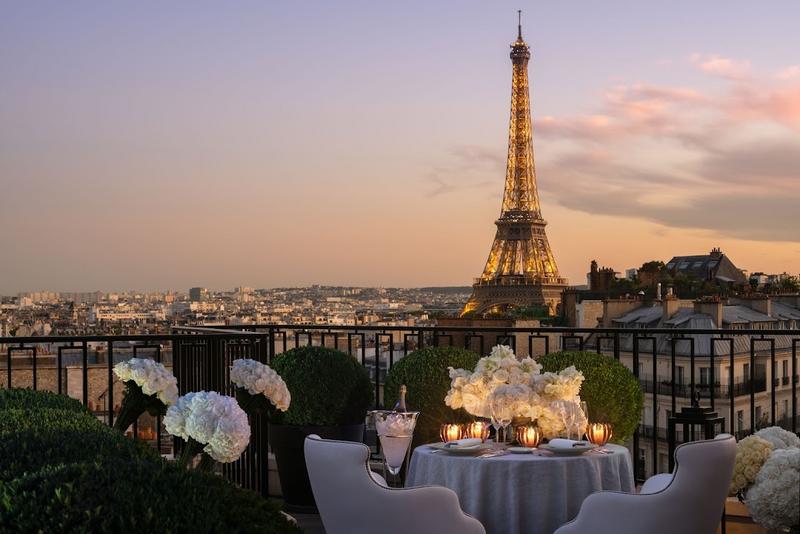
Ornate, high-end hotel offering elegant rooms & suites, plus renown dining, a chic bar & luxe spa.