Classic 7-Day German Self-Driving Tour [Berlin-Munich-Innsbruck]
8 cities |
15 attraction(s) |
total distance 7709
km
 TIPS
TIPS
Day1
Day2
Day3
Day4
Day5
Day6
Day7
Day1: Potsdam > Berlin
2 attraction(s) ·
26 km
1
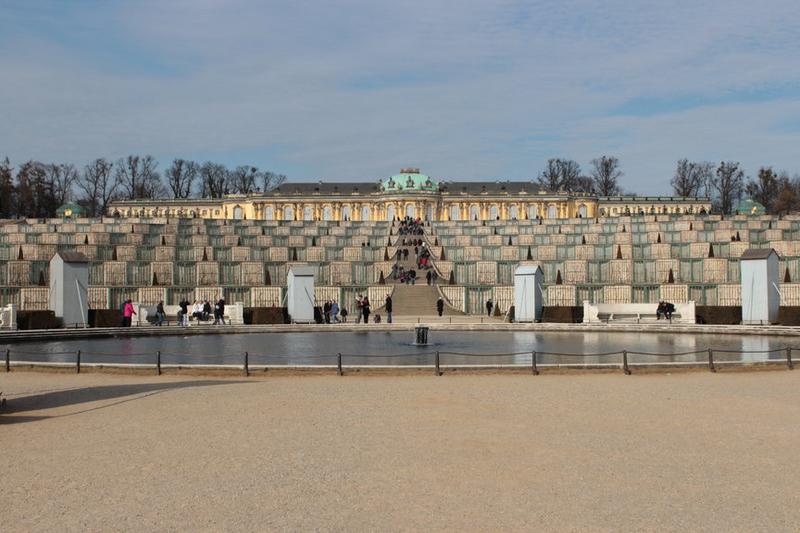
Sanssouci Palace is the most famous palace around Berlin, known as the "Versailles of Prussia". It is located in Potsdam, the capital of the state of Brandenburg, and was built in 1745 by order of Frederick the Great. It took 40 years to complete and is a UNESCO World Heritage Site. The main building of Sanssouci Palace is in Rococo style, with beautifully decorated interiors and stunning rooms such as the library, concert hall, and marble hall. At the other end, 2 kilometers away from the palace, there is the New Palace, also built by Frederick the Great, with a magnificent and impressive façade. In addition, there is a Chinese tea house in the park, where gilded figures reflect the contemporary imagination of China, blending Chinese and Western cultures. The gardens are another highlight of Sanssouci Palace, with terraced gardens and Baroque-style fountain sculptures, making it particularly charming.
26
km
2
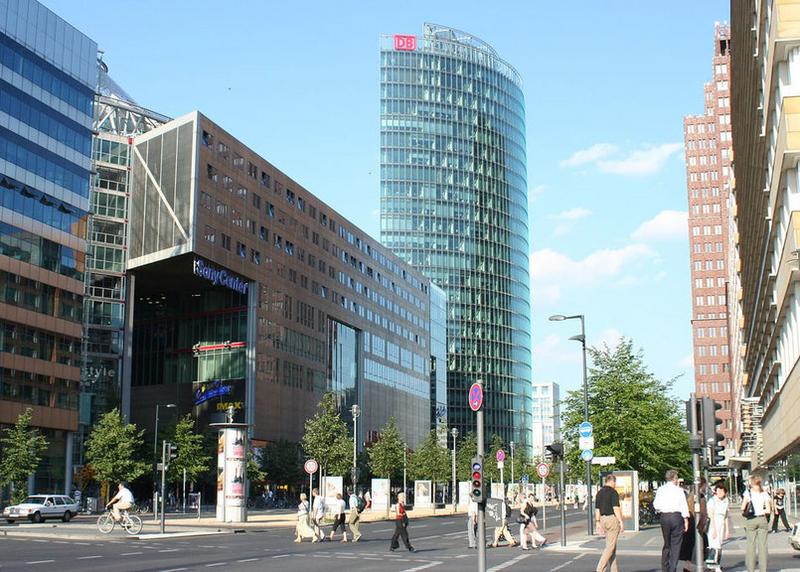
Potsdamer Platz, located near the Brandenburg Gate, used to be the site of Berlin's Potsdam Gate and was once a transportation hub and commercial center. However, World War II and the construction of the Berlin Wall turned it into a desolate area, even filled with landmines. After the reunification of Germany, efforts were made to rebuild and develop the area, and it has now become a modern commercial center with high-rise buildings and bustling traffic. These buildings are adorned with prominent logos, showcasing their commercial status. The Sony Center, with its large dome, houses various cafes, restaurants, and cinemas, making it a popular destination for tourists, as well as providing free WIFI hotspots. Additionally, on the 24th and 25th floors of the 103-meter-high Kollhoff Tower (next to the PWC building), there is an observation deck offering views of Potsdamer Platz and the surrounding area. Furthermore, remnants of the Berlin Wall and ground markings are preserved here, serving as witnesses to history.
Day2: Dresden
2 attraction(s) ·
1 km
1

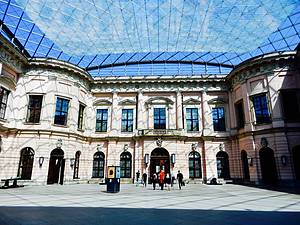
Palace state art collection venue rebuilt after wartime bombings with an iconic domed courtyard.
1
km
2

The Elbe River is one of the largest rivers in Germany and flows through the city of Dresden. The Elbe River in Dresden meanders slowly. The upstream section of the Elbe River is the famous Saxon Switzerland National Park, and the downstream section is the birthplace of European ceramics - Meissen. The Bruhl Terrace along the banks of the Elbe River brings together the treasures of the entire German Baroque period, and locals also call it the "Florence on the Elbe," which is a source of pride for the local residents.
Day3: Munich
3 attraction(s) ·
1 km
1
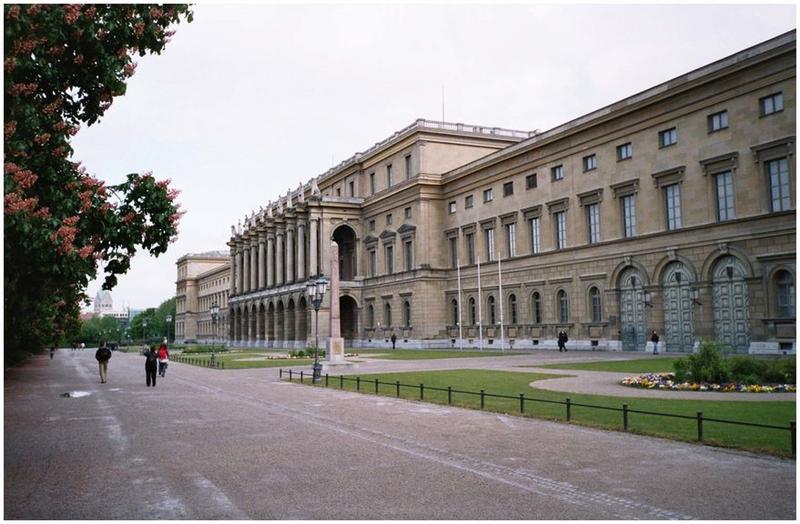
The Wittelsbach Palace in the center of Munich, Germany, was built in 1385 and has gradually expanded over time. It was the residence of the rulers, dukes, and kings of Bavaria until 1918. Today, the palace is open to visitors, showcasing its architecture, interior decorations, and royal collections. The Munich Palace consists of ten courtyards and museums, with 130 exhibition rooms. It is divided into three main parts: the King's Building (Königsbau) near Max-Joseph-Platz, the Old Residence (Alte Residenz) facing the Palace Street, and the Festsaalbau, Altes Residenztheater, and Schatzkammer facing the Palace Garden. The Palace Treasure House exhibits a remarkable collection of gold and silverware, enamel crafts, crystal, ivory products, and more, representing the heritage of royal residences over five centuries. Visitors can also admire the reconstructed King's Suite at the Palace Museum. If you plan to visit multiple attractions, it is recommended to purchase a combination ticket from the Bavarian Palace Department (refer to their website: http://www.schloesser.bayern.de/englisch/palace/objects/jahresk.htm).
1
km
2
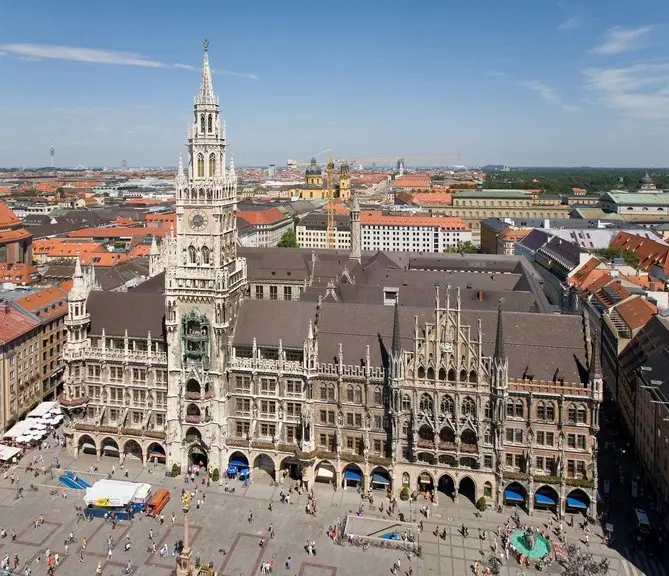
The must-visit place in Munich city center is Marienplatz. This square used to be a market place until 1807. Today, most of the buildings surrounding the square were built in the 19th and 20th centuries. In the center of the square stands a Marian column, where people express their gratitude and admiration for Virgin Mary. In the northeast corner of the square, there is a fish fountain, which used to be the place for butcher apprentices to complete their apprenticeship ceremony. Marienkirche is located in the northwest corner of the square, the New City Hall is situated on the north side of the square, and the Old City Hall is on the east side of the square. Viktualienmarkt is located in the southeast side of the square. Whether it's history, culture, or scenery, Marienplatz is a place not to be missed.
1
km
3
Munich's New Town Hall was constructed in three phases, spanning from 1867 to 1904. Its towering clock tower on the west side has become one of Munich's iconic landmarks. The clock tower not only marks the highest point of the old city ring road, surpassing the height of other buildings, but also features the "Glockenspiel," known as the fourth largest puppet dance in Europe. At 11:00 and 12:00, as well as at 17:00 daily, and in the evenings at 17:00 and 21:00 from May to October, colorful copper figures on the clock tower perform scenes of knightly tournaments, while figures below perform the dance of the barrel makers, creating a magnificent spectacle. Don't miss the opportunity to witness this spectacular display if you're visiting as a tourist.
Day4: Fussen
2 attraction(s) ·
2 km
1
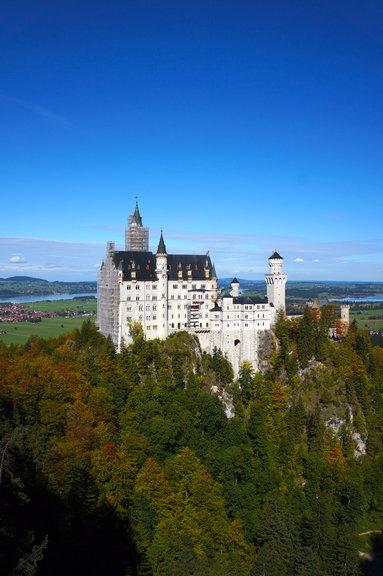
Neuschwanstein Castle is located in the Alpine region of southern Germany and is one of the country's most famous tourist destinations. It is a masterpiece of King Ludwig II, with its architectural style and stunning landscape resembling a fairytale. The interior of the castle is also exquisite, including the Throne Hall, King's Bedroom, Living Room, Dressing Room, and a large Concert Hall. The castle's history is tragic, but it still attracts countless visitors. Construction of the castle began in 1869, but when King Ludwig II passed away, only the exterior was completed. Three months later, the government transformed it into a museum, and parts of the castle's interior are now open to visitors for a tour of about 30 minutes. The best view of the entire castle can be enjoyed from the Marienbrücke (Mary's Bridge) behind the castle. If you want to stay around the castle, it is recommended to choose to stay in the nearby town of Füssen, which has a medieval history.
2
km
2
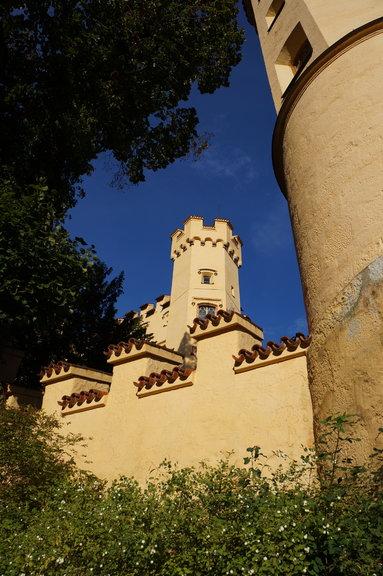
Hohenschwangau Castle, also known as High Swan Castle or Old Swan Castle, is a historic castle located in the village of Hohenschwangau in the Bavarian state of Germany. Built in 1836, it was once the childhood residence of King Ludwig II. The castle is located near the town of Füssen and is not far from Neuschwanstein Castle, both of which stand at the foot of the mountains and offer picturesque views.
Day5: Innsbruck
2 attraction(s) ·
1 km
1
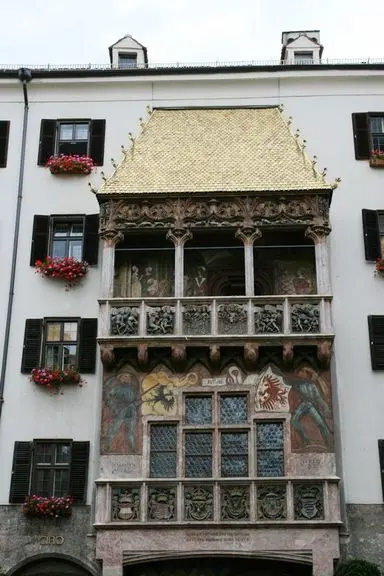
Goldenes Dachl is an old building located at the end of Herzog-Friedrich-Strasse in the old town of Innsbruck, Austria. Built in 1500, it is an example of late Gothic architecture. Originally known as the New Residence, it was constructed to commemorate the engagement of Maximilian I. It was converted by Nikolaus during 1494-1496 from a previously dilapidated arcade into a loggia with Gothic vaulting, providing a vantage point to observe the square below and for watching games and theatrical performances. The loggia of the Goldenes Dachl spans a width of 16 meters, with a roof height of only 3.7 meters, but its roof is covered with 3,450 gilded copper tiles, hence its name. The eaves are adorned with ornate animal figures, and the columns are decorated with intricate reliefs, including statues of Emperor Maximilian I and his wife. The façade features the coats of arms of Austria and Hungary, the double-headed eagle and the king's eagle, as well as the coats of arms of Burgundy and Milan, Styria and Tyrol. The wall paintings on the Goldenes Dachl depict two guards carrying the flags of the Holy Roman Empire and Tyrol, and the original is preserved in the Tyrolean State Museum.
1
km
2

A majestic gate gives entry to this historic street with shops, outdoor cafes & scenic views.
Day6: Salzburg
2 attraction(s) ·
1 km
1
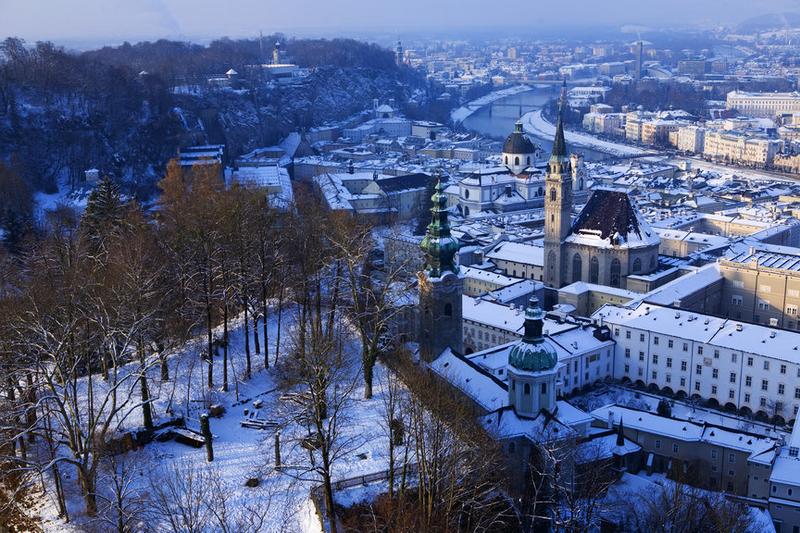
Salzburg Fortress, located on a hill in the old town area, was built in 1077. It is one of the largest medieval castles in Europe and is an iconic landmark within the city of Salzburg. With over 996,000 visitors annually, it has become a popular tourist attraction in Austria. In addition to its museum showcasing ancient weapons, instruments, and folklore, the fortress also has a café where visitors can enjoy panoramic views of the magnificent scenery below. Regular classical chamber music concerts are held inside the castle, featuring popular classical music.
The open spaces along the north and south walls of the castle have become popular spots for photography enthusiasts to capture city landscapes. The nearby Nonnberg Monastery Church, located halfway up the hill near the castle, is another popular spot for photo opportunities. Although the monastery is small, it has a rich history and can be reached via a flat path behind the mountain.
Friends with a valid Salzburg residence permit can enter the castle for free, but they must hike up the hill and present valid ID to obtain their tickets. This special offer has been in place for several years, but the duration of this promotion is unknown.
1
km
2
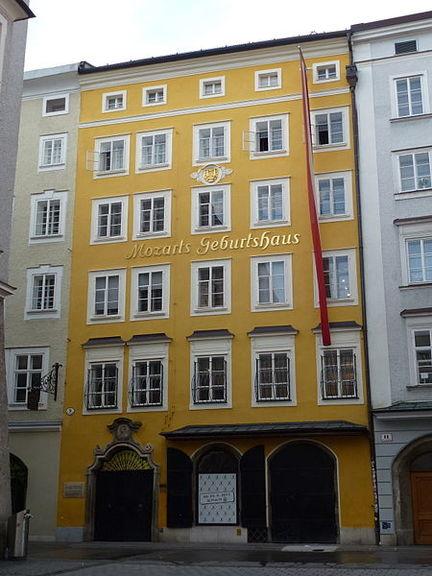
Mozart's birthplace is located at Getreidegasse 9, the main street in the old town of Austria. The yellow building, adorned with the Austrian flag and a piano-shaped music sign, is known as Mozart's House. Mozart's father, a violinist, lived with his family on the third floor of this building from 1747 to 1773.
In 1880, the first Mozart museum was established here and gradually transformed into today's Mozart's Birthplace Museum, attracting thousands of Mozart and classical music enthusiasts. Visitors can explore the rooms where Mozart and his family lived, admire historical instruments, documents, portraits, memorabilia, and the Mozart family's correspondence.
The renovated museum has sparked controversy among locals, as some believe that the museum designers did not fully understand Mozart and failed to preserve the true appearance of Mozart's family home. The author has visited both versions of the museum, and the current version is more modern and lacks traditional charm, but it provides a more comprehensive display of Mozart's works. For example, there are models and detailed explanations of Mozart's famous operas on the second floor, which is a great delight for professionals and enthusiasts. Personal preferences may vary regarding the changes made to Mozart's birthplace.
Please note that wheelchairs or mobility scooters cannot be used inside the museum.
Day7: Salzburg > Berlin
2 attraction(s) ·
6870 km