Nanchang Two-Day Tour Guide
1 cities |
6 attraction(s) |
total distance 5
km
 TIPS
TIPS
Day1
Day2
Day1: Nanchang
3 attraction(s) ·
1 km
1
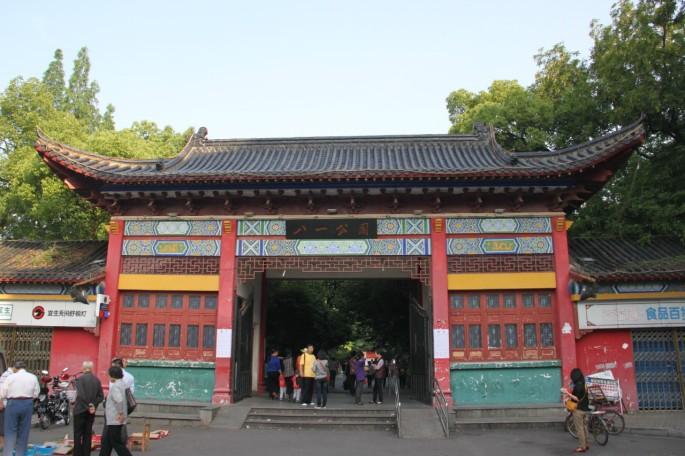
The Bayi Park was a Tribute Academy in the Qing Dynasty, and it was rebuilt as the Hulin Park in 1932. On April 3, 1946, it was renamed as the Jieshi Park. In July 1950, it was changed to its current name, covering a total area of 23.7 hectares, with a land area of 6.4 hectares. The park is lush with trees and colorful flowers, and can be divided into two parts: the lake area and the land area. The lake area includes attractions such as Donghu Lake, Baihua Island, Baihua Bridge, Guanao Pavilion, Suti, Supu, Shuimuqing, Huaguan, Ji Quqiao, Lake Heart Pavilion, and Boat Dock. On land, there is a cultural relic lawn square with more than ten stone statues representing the Jin, Tang, Song, Yuan, Ming, and Qing dynasties, as well as facilities such as a teahouse, children's playground, and greenhouse for visitors to rest and play. The park is located in the bustling city center, with shady trees and clear lake water, and is known as one of the "Top Ten Scenic Spots of Yuzhang" for "East Lake Moon Night" and "Supu Spring Dawn" here.
1
km
2

Nanchang City is located in Jiangxi Province, with Donghu Lake at its center, covering an area of approximately 13 hectares. Since the Tang Dynasty, Donghu Lake has been a famous scenic lake in Nanchang City. After the Ming Dynasty, it was divided into four lakes: Dong, Xi, Nan, and Bei, connected by bridges. There are three small islands in Donghu Lake, collectively known as "Sanzhou," including Baihua Island. Currently, there are Jiuzhou Bridge, Baihua Bridge, and Haicheng Dam connecting the islands. On the islands, there are the "Shuimu Qinghua" Pavilion, Zhongshan Pavilion, Baihua Island Pavilion, Suwendike, and Cultural Relics Square, etc.
In 1932, this area was transformed into a lakeside park, and in April 1946, it was renamed as Chiang Kai-shek Park. In July 1950, it was renamed as August 1st Park. Since the founding of the People's Republic of China, the government has planted trees, repaired embankments, dredged lakes, and built pavilions and curved bridges here, making it a place for people's leisure and entertainment.
1
km
3

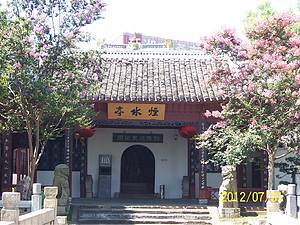
Youmin Temple is located north of Bayi Park in Nanchang City, on the east bank of Donghu Lake. It was first built during the Tianjian period of the Southern Liang Dynasty and was originally a residence donated by Yuzhang Wang Wei to the monk Ge Yudan. Youmin Temple has a grand scale, and the front hall is filled with numerous Buddha statues and a thousand Buddha cylinders. Outside the cylinders, there are more than 90 Buddha statues, each with a different expression, ancient and dignified. The number of Buddha statues on the cylinders is also very rare in China. In the back hall of Youmin Temple, there is a solemn and majestic giant bronze Buddha statue, regarded as one of the more precious cultural relics. Next to Youmin Temple is a four-story octagonal bell tower, showing a tall and beautiful posture.
Day2: Nanchang
3 attraction(s) ·
3 km
1
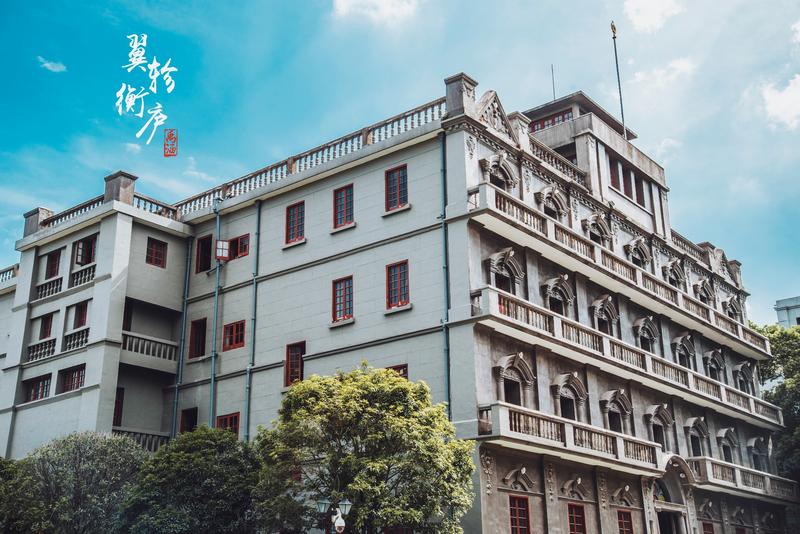
The building has a silver-gray appearance, is in the shape of the Chinese character "hui", and has four floors facing south. It was formerly known as the Jiangxi Grand Hotel, built in 1922 and completed in 1924. The building combines Chinese and Western styles, with cement relief decorations on the doors and windows in Western style. There is also a large courtyard inside the building, containing four fire-prevention water tanks, which reflects the unique charm of traditional Chinese architecture.
At 2am on August 1, 1927, a gunshot woke up the whole country, and the Nanchang Uprising began the armed struggle of the Chinese revolution. The Secretary of the CCP's Front Committee, Zhou Enlai, the Commander-in-Chief of the Uprising, He Long, the Commander of the Front, Ye Ting, the Chief of Staff of the Third Army Officer Education Team, Zhu De, and the Chief of the Military Advisory Team, Liu Bocheng, led more than 20,000 people against the Kuomintang reactionary forces, and fired the first shot of the anti-revolutionary war. This uprising marked the beginning of the Communist Party of China taking over the armed struggle and opened a new era for the People's Army. In order to commemorate this history, the government established the Nanchang August 1st Uprising Memorial Hall on the site of the former command post in 1956.
2
km
2
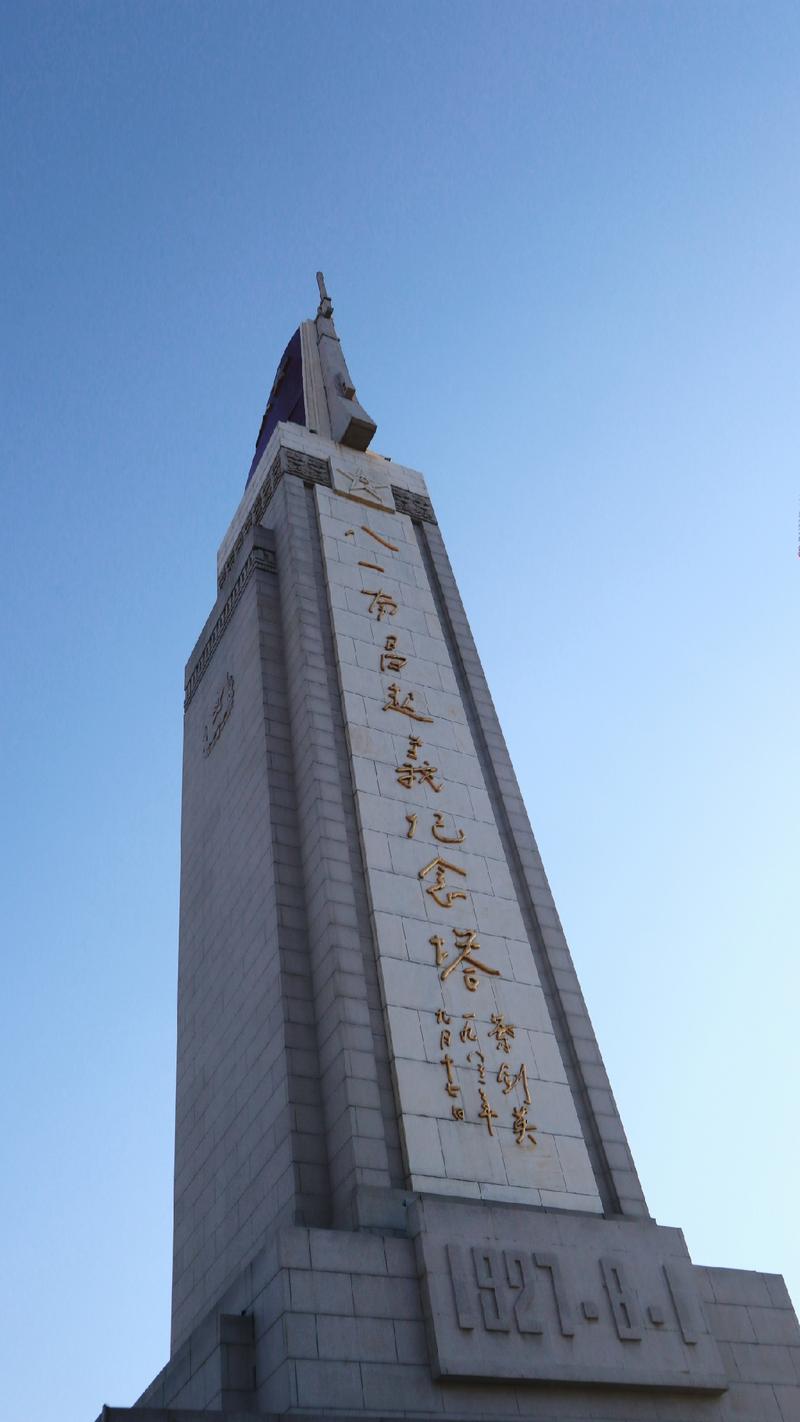
In 1977, to commemorate the 50th anniversary of the "August 1st Nanchang Uprising", the August 1st Nanchang Uprising Memorial Tower began construction and was completed on January 8, 1979. The tower is rectangular in shape and 45.5 meters high. On the north side are nine large characters in gold-plated bronze, inscribed by Marshal Ye Jianying, reading "August 1st Nanchang Uprising Memorial Tower", below which is a granite plaque with a brief introduction to the uprising. The other three sides are adorned with granite reliefs depicting "Declaration of the Uprising", "Assault on the Enemy's Camp" and "Cheering for Victory". The tower has two wing walls, each decorated with the emblem of the Chinese Workers and Peasants Red Army. At the top of the tower are a standing granite sculpture of a rifle inscribed with "Hanyang Made" and the August 1st Army flag made of red granite tiles.
The August 1st Nanchang Uprising Memorial Tower is grand in design and profound in meaning. Six levels of lighting and multiple projection lights are set on the tower, making it bright and transparent at night, symbolizing that the bright red color of the August 1st Army flag will never fade.
2
km
3
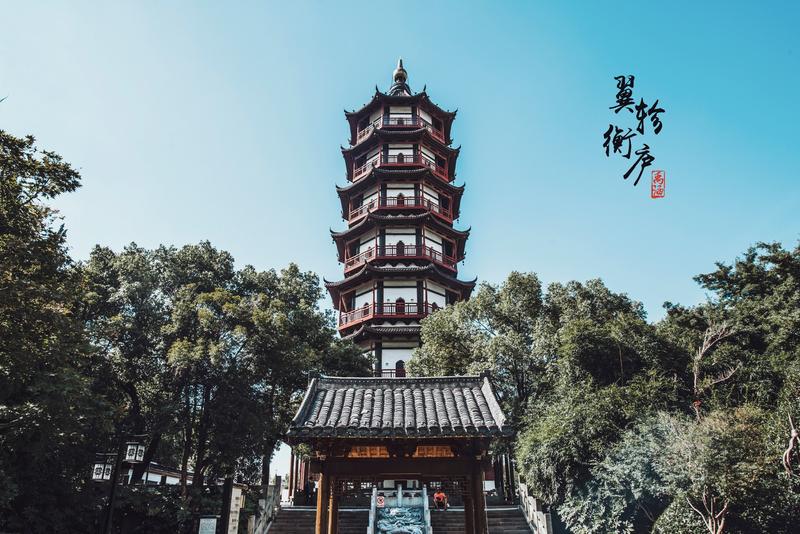
The Shengjinta Pagoda is located on the east side of Shengjinta Street in Xihu District, Nanchang City. Its original site was outside the ancient Jinxian Gate, and it was built during the Tang Tianyou period (904-907 AD). According to legend, before the tower was built, a monk dug up an iron box containing four gold ropes, three ancient swords (engraved with the words "Wind-Driving", "Fire-Taming", and "Jiao-Subduing"), and a gold bottle containing 300 relics. Therefore, it was named Shengjinta.
Shengjinta is a brick and wood structure pagoda typical of southern China. It is about 50.86 meters high with seven visible levels and eight sides (with the eighth level being invisible). It has a red railing, green tiles, black-cornered walls, and a gourd-shaped golden top, all of which are rich in religious color. There are also ancient bronze bells hanging from the eaves, spaced at seven levels with seven sounds. The gourd-shaped copper top shines with golden light, while the entire tower features a simple and elegant style. Each level has four real doorways and four false ones, and their arrangement is varied and unique. Shengjinta has a simple and beautiful style, featuring the typical architectural art of southern China. It has a history of over 1,100 years since its construction in the Tang Dynasty, and is a crystallization of historical information and the wisdom of the working people. Therefore, it is known as "the guardian of the Jiangcheng with water and fire in harmony."