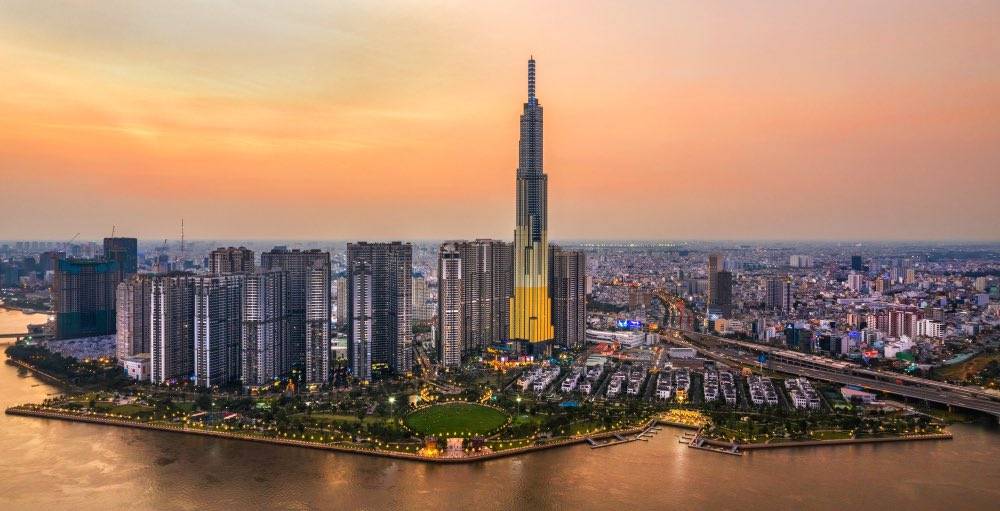
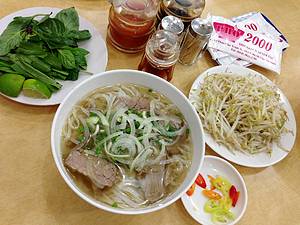
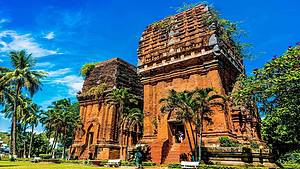
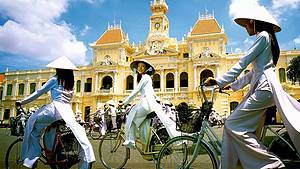
The largest city in Vietnam, located in the southern part of the country, formerly known as Saigon. It is a vibrant city where colonial architecture from the French colonial era coexists with modern skyscrapers, floods of motorbikes, and street food. It is the economic, cultural, and tourist center, gathering numerous tourist attractions, markets, cafes, and restaurants.
This building was used as the presidential palace of the former South Vietnam regime and is a symbolic place for the end of the war in 1975. Inside, the conference rooms, operations rooms, and underground command rooms from that time remain almost intact, allowing visitors to experience the political and military atmosphere of the Vietnam War era. The tanks within the grounds are also worth seeing.
A beautiful colonial-style post office built during the French colonial era and one of the landmarks in central Ho Chi Minh City. It features a high arched ceiling, mosaic tile floors, and classic postal counters, allowing tourists to explore the interior, purchase commemorative stamps, postcards, and send letters on the spot.
A Catholic church with an impressive red brick exterior, known as 'Saigon Cathedral' or 'Notre-Dame Basilica.' Built in the Neo-Romanesque style during French rule, the twin spires of the tower are a symbol of the city. Although it’s often under renovation, the surrounding area is a popular photography spot.
A museum displaying photographs, materials, weapons, and military vehicles related to the Vietnam War. Tanks, fighters, and helicopters are lined up outdoors, and inside the museum, numerous panels and photos convey the tragedy and impacts of war. Though the content can be heavy and shocking, it is an essential spot to understand Vietnam's modern history.
One of the main streets running through the center of Ho Chi Minh City, lined with boutiques, general stores, stylish cafes, restaurants, and hotels. It is a mix of historical French-style buildings and modern structures, making it a popular area for strolling and shopping for tourists.
A massive market that is considered a must-see for Ho Chi Minh tourism. It has everything from clothing, general goods, bags, coffee, spices, souvenirs, to local food canteens. You can enjoy shopping while negotiating prices in this vibrant indoor market. It’s also recommended for those who want to experience the daily lives of ordinary people.
A high-end shopping mall housing Japan’s Takashimaya department store, as well as Japanese and international brand shops, restaurants, and cafes. This air-conditioned and comfortable space is convenient for escaping the heat, finding quality souvenirs, or using the clean food court.
Known as the backpacker district of Ho Chi Minh, it is a nightlife spot with many guesthouses, bars, clubs, massage parlors, and street food stalls clustered together. At night, the neon lights shine, loud music plays, and the street becomes lively, offering tourists an opportunity to experience Ho Chi Minh's bustling nightlife.
A city in the Mekong Delta region that serves as a popular day-trip destination from Ho Chi Minh. Cruise tours exploring the tributaries of the Mekong River are popular, visiting river-side villages, orchards, small islands, a coconut candy factory, and beekeeping farms. It is a spot where you can experience the scenery typical of the Mekong Delta.
A vast delta area formed by the Mekong River before it flows into the South China Sea, an important agricultural region in southern Vietnam. With its intricate network of waterways, orchards, rice paddies, and river-side settlements, boat cruises and floating market tours are popular. Many day tours from Ho Chi Minh, passing through places like My Tho, are organized.